Link: LiveScience.com
Following ice shelf collapses
in Antarctica, researchers have gained access to sea bed areas previously accessible only through holes drilled through 100 m – thick ice. Among the new creatures discovered is the Antarctic octopus (Paraledone turqueti) (below- Credit: E. Jorgensen, NOAA 2007):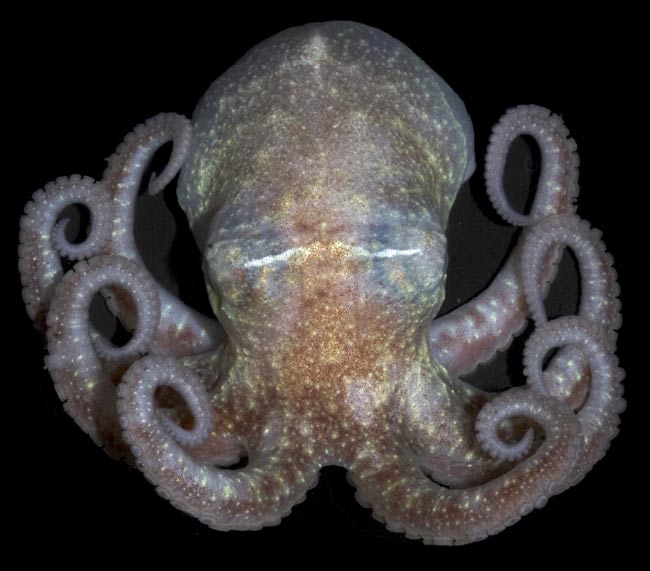
"One of
the main aims of the expedition was to survey both indigenous
life-forms and creatures that had moved in after the collapse to take
advantage of the newly opened environment.Gutt said that 95 percent of the animals the
expedition found were probably indigenous and just 5 percent had moved
in after the ice shelves collapsed, but even that small percentage
indicated a shift in biodiversity and species composition in the area which will probably continue.“Life at the sea floor obviously reacts very slowly
to this very climactic change in the environmental conditions," Gutt
said. “[It] needs hundreds to thousands of years until a new community
has fully developed, if this will happen at all.”One creature new to the neighborhood was the fast-growing, gelatinous sea squirt, which the scientists found in several dense patches."
 iBiome

I think you are not quite right and you should still studying the matter.
LikeLike
Gross!!!!!!! hehe
LikeLike
Interesting site, always a new topic .. good luck in the new 2011. Happy New Year!
LikeLike
I am truly glad to glance at this blog posts which contains lots of valuable data, thanks for providing such statistics.
LikeLike