
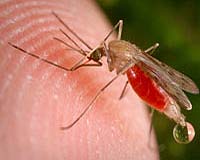
From Seed, scientists at John Hopkins have bred mosquitos that are resistant to malaria, and therefore unable to infect humans with the parasite. I haven’t read the original PNAS paper yet but I wonder what potential there is for the parasite to mutate around the resistance in the medium to long term i.e. how long before we return to square one. Further into the article I hit the big qualifier:
The study suggested that when feeding on malaria-infected blood,
"transgenic malaria-resistant mosquitoes have a selective advantage
over non-transgenic mosquitoes," the authors wrote.The lab-altered mosquitoes competed equally well with natural
insects when fed non-infected blood but did not outbreed their natural
counterparts in that case, according to the study.For the strategy against malaria to be effective, transgenic
mosquitoes would have to outbreed the natural insects when feeding off
untainted blood.Further research was still needed before the altered insects could
be released into the wild, as only a small percentage of mosquitoes in
nature are exposed to malaria, the authors wrote.Still, the research carried "important implications for
implementation of malaria control by means of genetic modification of
mosquitoes," the authors wrote.
I am also curious what the regulatory process would be for releasing a transgenic insect into the wild. I Guess it depends on where it is released. For some countries it would be "Badges? We don’t need no stinking badges"
 iBiome