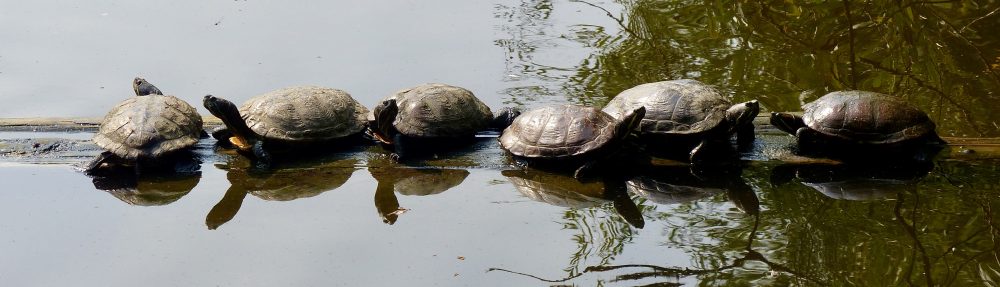
too thick

I actually hope this is not true. As the father of 2 little girls, it really turns my stomach that people like this exist.  Link: customers_suck:

My customers often annoy me. They often make me mad, and often I think they are idiots.
However, they seldom make me want to physically assault them.
Today, though, I came very close to hitting someone.
I work at a bookstore. I was cashiering today when a woman and her two kids (a boy and a girl, both somewhere between 13-15) came up to the register. The mom was buying 2 celeb gossip magazines, and the boy put down a book. The girl then walked up and set down the newest volume of the Sisterhood of the Traveling Pants series.

The mom says "You can’t buy that."
Girl: Why?
Mom: Because it’s too big.
Girl: [Brother] is buying a book that big. It’s not very expensive.
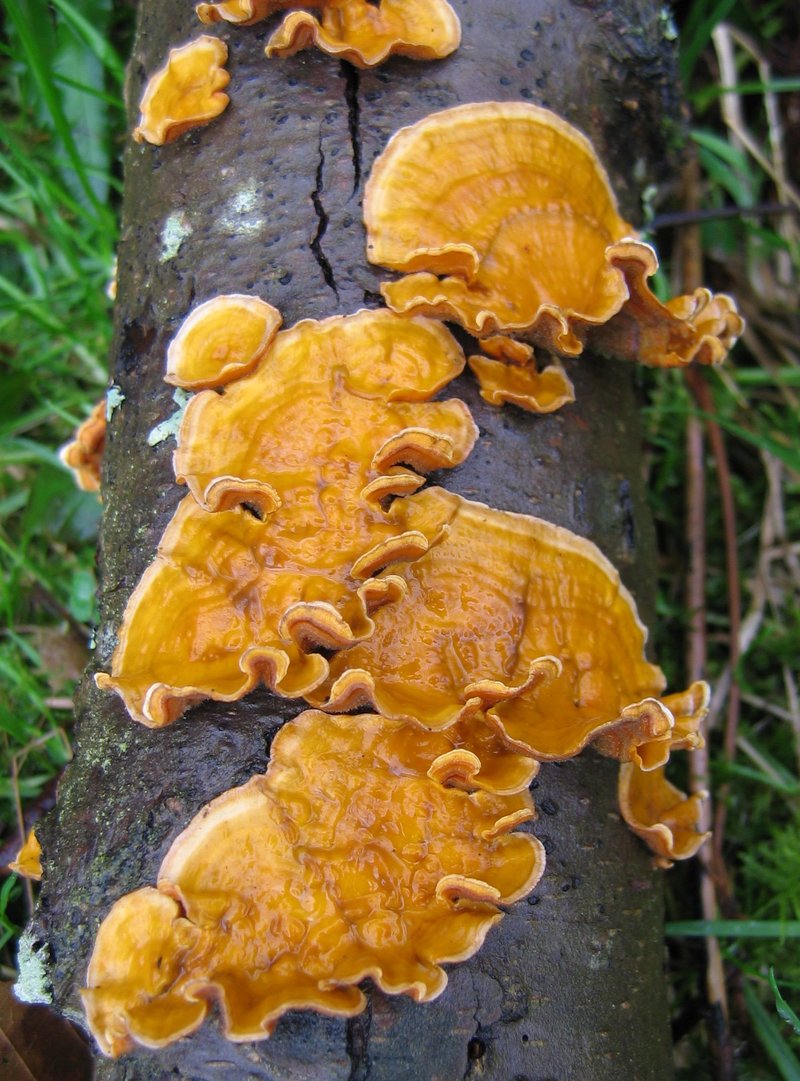
Mom: [Brother] is a boy. You’re a girl. And girls shouldn’t read big books like that. It’s too thick. Boys don’t like girls who read thick books. You want boys to like you, don’t you?

The girl went and put the book away.

via Pharyngula
Sheeple

Researchers have developed human-sheep chimeras as an avenue to addressing the growing demand for organ transplants.  Suprisingly  (to me anyway) these researchers have actually been allowed to produce a live animal, rather than stop the work at the fetal stage. So my question is at what ratio do we begin to consider an animal like this to be ‘human’ – 50%? 80%? 100%?  Note that the DNA itself has not been mixed.  Individual cells are either human or sheep.

O, what a brave new world.

Link: Now scientists create a sheep that’s 15% human.

Scientists have created the world’s first human-sheep chimera – which has the body of a sheep and half-human organs.

The
sheep have 15 per cent human cells and 85 per cent animal cells – and
their evolution brings the prospect of animal organs being transplanted
into humans one step closer.

Professor Esmail Zanjani, of the
University of Nevada, has spent seven years and £5million perfecting
the technique, which involves injecting adult human cells into a
sheep’s foetus.

He has already created a sheep liver which has a large proportion of
human cells and eventually hopes to precisely match a sheep to a
transplant patient, using their own stem cells to create their own
flock of sheep.

Aside from the animal welfare issue, there are some real risks with this sort of research. In particular, a nasty virus could find itself in a new and permissive environment:

Dr Patrick Dixon,
an international lecturer on biological trends, warned: "Many silent
viruses could create a biological nightmare in humans. Mutant animal
viruses are a real threat, as we have seen with HIV."

Animal
rights activists fear that if the cells get mixed together, they could
end up with cellular fusion, creating a hybrid which would have the
features and characteristics of both man and sheep. But Prof Zanjani
said: "Transplanting the cells into foetal sheep at this early stage
does not result in fusion at all."

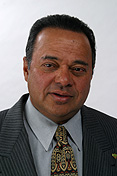
Hector Jacques appointed to the Order of Canada

Hector Jacques, founder of Jacques Whitford and President for much of its 35 years, has been appointed to the  Order of Canada.  Hector is a visionary and true entrepeneur, as well as a bare knuckled businessman.  I worked for JW for 5 years or so, and it was1_fe71_jacques
Hector’s drive and policy of "hire the best, and the work will come", recognizing that the principle assets of the firm were its people,  that propelled the company to be one of the largest environmental firms in North America with 40 offices and 1600 people.  The company, at least while I was there, was very much an extension of Hector’s formidable personality.

Jacques has been elected as an Officer for his outstanding contributions to the field of engineering. “It’s a tremendous honour to be selected among thousands of outstanding citizens,” says Jacques. “Canada is a great country and I am proud to have the opportunity to contribute to its growth, with the support of so many exceptional colleagues and friends.”
Born and raised in Goa, India, Hector J. Jacques began his career in geotechnical engineering after completing his master’s degree from the Technical University of Nova Scotia, today part of Dalhousie University. In 1972, he and fellow graduate Michael Whitford founded Jacques Whitford. Starting with only a handful of employees, the firm has become one of the largest and most innovative in the environmental engineering industry. Jacques served as President and Chief Executive Officer from the firm’s inception until 2003, leading the company through remarkable growth over the years. As Jacques Whitford celebrates its 35th anniversary this year, Jacques continues to provide leadership and guidance for the company in his current role as Chairman of the Board of Directors.

Congratulations Hector, Good on ya!

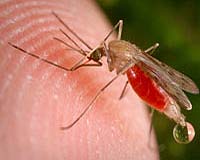
Transgenic Mosquito Resistant to Malaria

Malariamosquitobg
From Seed, scientists at John Hopkins have bred mosquitos that are resistant to malaria, and therefore unable to infect humans with the parasite. I haven’t read the original PNAS paper yet but I wonder what potential there is for the parasite to mutate around the resistance in the medium to long term i.e. how long before we return to square one.  Further into the article I hit the big qualifier:

The study suggested that when feeding on malaria-infected blood,
"transgenic malaria-resistant mosquitoes have a selective advantage
over non-transgenic mosquitoes," the authors wrote.

The lab-altered mosquitoes competed equally well with natural
insects when fed non-infected blood but did not outbreed their natural
counterparts in that case, according to the study.

For the strategy against malaria to be effective, transgenic
mosquitoes would have to outbreed the natural insects when feeding off
untainted blood.

Further research was still needed before the altered insects could
be released into the wild, as only a small percentage of mosquitoes in
nature are exposed to malaria, the authors wrote.

Still, the research carried "important implications for
implementation of malaria control by means of genetic modification of
mosquitoes," the authors wrote.

I am also curious what the regulatory process would be for releasing a transgenic insect into the wild.  I Guess it depends on where it is released.  For some countries it would be "Badges? We don’t need no stinking badges"

A New Home for Unleashed Informatics

Unleashed Informatics, the progeny of The Blueprint Initiative (my alma mater), a Genome Canada funded bioinformatics project, has been purchased by Thomson.  Unleashed houses several high quality biological databases including

  • BIND (Biomolecular Interaction Network Database) containing 200,000 biomolecular interactions
  • SMID (Small Molecule Interaction Database) containing over 23 million experimentally observed small molecule interactions
  • BOND
    (Biomolecular Object Network Database) data warehouse that combines
    access to BIND and SMID data with publicly-accessible databases, plus
    similarity search algorithms

With Thomson providing the necessary stability and infrastructure to further build out the database and get this information to users, this is positive news, not just for Unleashed, but the broader scientific community.

Link: Announcement: March 20, 2007: Unleashed Informatics.

Stamford, CONN, USA, March 20, 2007 – The Thomson Corporation (NYSE: TOC; TSX: TOC) today announced that its Scientific business unit has acquired privately-held Unleashed Informatics Ltd, a life sciences data management company. Unleashed Informatics is the market leader in bioinformatics data and owns the largest repository of value-added bioinformatics records — a highly significant area for target-based drug discovery. Its management team and employees will become part of Thomson Scientific.

Continue reading

$100 million for genomics

Today’s federal budget provides for $100 million investment this year in genomics and proteomics.  From the  Genome Canada website:

Budget 2007 provides Genome Canada with an additional $100 million in 2006–07 to sustain funding for the regional genome centres and related technology platforms, extend promising research projects and support Canada’s participation in strategic international research collaborations.

The government’s committments to the R&D economy are described here.

Bali welcomes silence for ‘Nyepi’ holiday

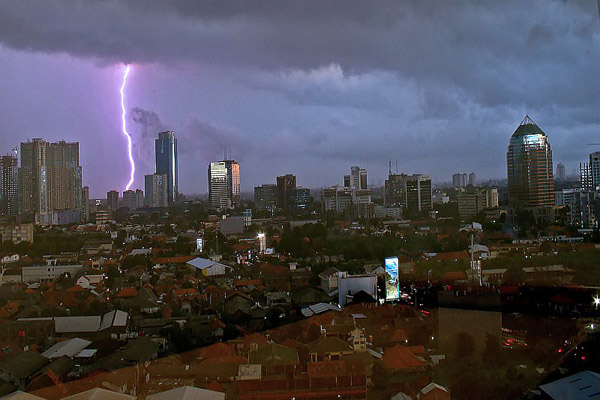
Speaking of Indonesia, the Jakarta Post describes tomorrow's Nyepi holiday (Day of Silence) in Bali.  Despite frequent travel to the island I was never there during Nyepi.  Bali is a special place and its flavour of Hindusim is distinct.   

The resort island of Bali
will be temporarily closed for 24 hours as of Monday morning at 6 a.m.
through to the same time Tuesday to observe Nyepi (the Hindu Day of Silence).

The island's Ngurah Rai International Airport will welcome its last
flight on Sunday at midnight and will halt operations until the morning
of March 20, according to airport spokesman Ahmad Munir…

…During the ritual of Nyepi, 90 percent of the island's 3.5 million inhabitants will practice Yoga Semedi and Catur Berata Penyepian (meditation), Amati Geni (which forbids them from lighting fires and switching on lights), Amati Karya (working), Amati Lelanguan (enjoying leisure activities) and Amati Lelungan (leaving their houses). 

Bali will be completely darkened and silenced for a full day, allowing
the island's Hindu population to meditate, contemplate and pray for a
better future…

Continue reading