Nice work if you can get it

I’ve often been curious about the business of contributing scientific expertise to movies and television – how one gets the work, do they listen, that sort of thing.  In "My life as an advisor to TV and film", Wayne Grody describes his work for the Nutty Professor and CSI, among others.

For both Eddie Murphy Nutty Professor movies, the studio’s Art
Department asked me for assistance in designing the set for Professor
Klump’s laboratory. They came to my research lab at UCLA and took lots
of pictures, then we sat down with the Fisher products catalog and
started on page one as I pointed out what they needed to order as
"props" (with a budget of $50 million, money was no object)
….Sometimes my advice goes unheeded. Klump was supposed to be a
biology professor at a small liberal arts college, but his laboratory
occupied an entire soundstage on the Universal Studios lot — about ten
times larger than the best-funded faculty member at a major research
university. And while we tried to make it look as much like a
real-world molecular biology lab as possible (I brought my graduate
students along with me to help "dress the set"), when the director
arrived for the first scene to be shot there, he ordered some of the
visually boring thermal cyclers and centrifuges replaced by flasks and
tubes of bubbling green and purple liquids — more reminiscent of Dr.
Frankenstein’s laboratory than a modern facility….
…Even on the dramas, however, a cherished scientific truth will
sometimes have to be discarded in order to enable an essential story
development, such as a normally three-week-long forensic DNA analysis
that’s fictionally done in one hour for the sake of plot pacing. In
truth, few will ever notice these gaffs. As one TV producer told me,
the number of Ph.D. scientists watching his show accounts for no more
than 0.00001% of the Nielsen rating audience.

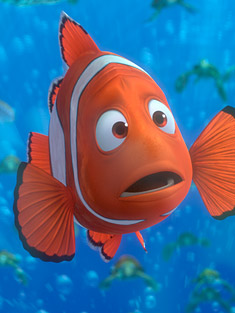
The bit about thumbing through a Fisher catalogue and budgets reminded me of a colleague ranting over beers about how the resources devoted to CGI on Finding Nemo Tale_leftdwarfed but at least one order of magnitude most large scale bioinfomatics efforts.  I think of a big project as something north of $5 million. But that’s just walking around money for the film industry.


cheaper to sequence his genome

The Woman with a Breast on her Foot

Just a week or so ago I was speaking to a physician friend of mine who was telling me about patients with breast tissue growing at odd parts of their bodies.  I thought "huh, that’s weird, never heard of anything like that before".  I guess a breast always seemed to me such a complex organ that it couldn’t just randomly pop out just anywhere.  FootbreastAs if on cue, Pharyngula links to a paper about a woman with a breast on her foot:

A 22-year-old woman sought medical care for a lesion in the plantar
region of her left foot, a well-formed nipple surrounded by areola and
hair. Microscopic examination of the dermis showed hair follicles,
eccrine glands, and sebaceous glands. Fat tissue was noted at the base
of the lesion. Clinical and histopathologic findings were consistent
with the diagnosis of supernumerary breast tissue, also known as
pseudomamma. To our knowledge, this is the first report of
supernumerary breast tissue on the foot….Supernumerary nipples, and less frequently supernumerary breasts, are present in about 1-5 percent of the population [1].
Such alterations are more common in women, usually occurring along the
embryonic milk line, which extends from the axilla to the groin [1, 2].
Supernumerary breast tissue (SBT) is rarely found beyond the mammary line…

Putting aside the thought of how strange it must be to walk on that thing, I wonder if, as PZ Myers suggests, it would be relatively easy to grow a breast in vitro, and does this have implications for reconstructing breasts post-mastectomy.

The Pre-Natal Abyss

Nabakov, linked in  Andrew Sullivan.  I find the commonsense notion that what will happen to our consciousness when we die, will be pretty much like what was happening before we were conceived, to be at once compelling, comforting, and frightening:

The cradle rocks above an abyss, and common sense tells us that our
existence is but a brief crack of light between two eternities of
darkness. Although the two are identical twins, man, as a rule, views
the prenatal abyss with more calm than the one he is heading for (at
some forty-five hundred heartbeats an hour). I know, however, of a
young chronophobiac who experienced something like panic when looking
for the first time at homemade movies that had been taken a few weeks
before his birth. He saw a world that was practically unchanged — the
same house, the same people — and then realized that he did not exist
there at all and that nobody mourned his absence. He caught a glimpse
of his mother waving from an upstairs window, and that unfamiliar
gesture disturbed him, as if it were some mysterious farewell. But what
particularly frightened him was the sight of a brand-new baby carriage
standing there on the porch, with the smug, encroaching air of a
coffin; even that was empty, as if, in the reverse course of events,
his very bones had disintegrated.

Today on The Current: Catastrophe and Creationism

Now that I take the bus or the bicycle, I rarely catch The Current. Today, however, I drove to SFU for a meeting and was treated to two pieces worth listening to. The first was on Indonesia  and its spate of recent disasters, natural and otherwise:

In the two-plus years since an estimated 160,000 Indonesians were
killed in the 2004 tsunami, thousands more have died in earthquakes,
hundreds have perished in landslides and floods and hundreds more in
plane crashes and ferry accidents. There have been three aircraft
accidents involving Boeing 737s since New Year’s Day. Infact, more
people died in disasters in Indonesia than in any other country last
year. And as if to add insult to injury, the environment ministry says
2,000 of the archipelago’s 17,000 islands could disappearing under
rising sea levels caused by climate change over the next 25 years.

The most interesting speaker was Debby Guha-Sapir, the director of the Centre for Research on the
Epidemiology of Disasters at the University of Leuven in Brussels,
Belgium. She correctly laid a fair amount of blame at the feet of corrupt government officials’ failures to avoid and / or mitigate many of these catastrophes.

The second segment dealt with the battle over creationism in science  classrooms in Turkey, and touched on how Muslim and Christian fundamentalists are finding common cause in their desire to push back the Enlightenment.

Now THAT was high quality radio.   

The audio can be reached by clicking through the link above.

Microarrays and Climate Change

From  Technology Review, new applications of genomics tools, in this case microarray technology, to model the effects of climate change on marine species at the gene expression level:

Using novel genomic technology, marine biologists have found troubling
clues that marine life could be extremely vulnerable to climate change.
By mimicking future ocean climes and using gene chips to detect how
marine organisms respond, the researchers can evaluate how well
different organisms deal with environmental stress. The findings, while
still preliminary and incomplete, are worrisome…

…So far, the team has focused its attention on a set of proteins, known
as heat-shock proteins, which kick in when an animal is under stress.
Almost all animals carry copies of these proteins, which can repair
other proteins that have been bent out of shape by heat and additional
environmental stresses. According to early results from gene-chip
studies, sea-urchin larvae raised at current carbon levels activate
their heat-shock proteins when faced with warming water temperatures.
But larvae raised at the best-case-scenario carbon level no longer
activate these genes under stress and therefore can’t respond to a
warming climate. "I don’t want to say we will lose all sea urchins,"
says Hoffman. "But there will be some part of the population that can’t
develop."…

…Although it’s hard to predict exactly how that loss will affect the
environment, it’s likely to change the structure of the entire
ecosystem. Without algae-eating urchins, "you might predict that algae
will become dominant in a particular area, which then might affect
availability of fish that live there, which could affect the fishing
industry or even tourism," Hoffman says.

While illuminating some of the useful applications of genomics to conservation, I find this article a bit alarmist.  As pointed out by a commenter on the article, sea urchins have faced warmer oceans in the past and survived.  There will be transition and loss, and a new equilibrium. The key point for we humans is whether the transition and new equilibrium significantly affects us, and how.

What Kind of Intelligence Do You Have?

found this quiz at Blogthings – What Kind of Intelligence Do You Have?. I love taking these things.   It seems to have picked up on my inability to remember the middle thing..anyway

Your Dominant Intelligence is Interpersonal Intelligence

You shine in your ability to relate to and understand others.
Good at seeing others’ points of view, you get how people think and feel.
You have an uncanny ability to sense true feelings, intentions, and motivations.
A natural born leader, you are great at teaching and mediating conflict.
You would make a good counselor, salesperson, politician, or business person.