A Pileated Woodpecker

I spotted this big beautiful pileated woodpecker (Dryocopus pileatus) a few weeks ago in Pacific Spirit Park, probing through the rotting bark for ants and other insects. How do these animals not get the worst headaches?

Why don’t woodpeckers pound themselves into brain trauma? From Ask a Biologist:

Woodpeckers are better than hoopoes at varying the path of their pecks. By moving their beaks around more, woodpeckers minimize brain damage in specific areas.

Woodpeckers’ skulls are more flexible because of the plate-like bones. That helps to minimize the damage of all that pecking.

Woodpeckers have a special bone that acts like a seat-belt for its skull. It’s called the hyoid bone, and it wraps all the way around a woodpecker’s skull. Every time the bird pecks, the hyoid acts like a seat-belt for the bird’s skull and the delicate brain it protects.

Even the woodpeckers’ beak helps. A woodpecker’s upper beak is longer than its lower beak, kind of like an overbite. The lower beak is also made of stronger bone to help absorb impact.

Scientists Create World’s Largest Coral Gene Database

Promising findings from genomic analysis of corals:

Corals face four major threats from humans: Destruction of reefs by grenades and poison used to kill fish for food; nutrient pollution, usually from sewage or agricultural runoff, that overstimulates harmful algae; increased heat in the upper ocean, which causes most coral bleaching that can kill reefs; and acidification of the ocean, according to Falkowski.”Corals are the most diverse marine ecosystems on the planet,” he said. “But their value to marine ecosystems — and to our own use of marine resources — is very underappreciated.”

Perhaps the extreme diversity of coral systems help along an adaptive response to climate change:

Bhattacharya and coauthors found dozens of genes that allow corals to coordinate their response to changes in temperature, light and pH (acidity vs. alkalinity) and deal with stress triggered by the algae that live with them and exposure to high levels of light.
Surprisingly, some of these stress-related genes are of bacterial origin and were acquired to help corals survive. An intriguing theory that arose from the study is that the vast genetic repertoire of corals may help them adapt to changing ocean conditions.

Source: Scientists Create World’s Largest Coral Gene Database

A new theory emerges for where some fish became 4-limbed creatures

"These transitional fossils were not associated with drying ponds or deserts, but consistently were found with humid woodland soils," he said. "Remains of drying ponds and desert soils also are known and are littered with fossil fish, but none of our distant ancestors. Judging from where their fossils were found, transitional forms between fish and amphibians lived in wooded floodplains. Our distant ancestors were not so much foolhardy, as opportunistic, taking advantage of floodplains and lakes choked with roots and logs for the first time in geological history."

Limbs proved handy for negotiating woody obstacles, and flexible necks allowed for feeding in shallow water, Retallack said. By this new woodland hypothesis, the limbs and necks, which distinguish salamanders from fish, did not arise from reckless adventure in deserts, but rather were nurtured by a newly evolved habitat of humid, wooded floodplains.

The findings, he said, dampen both the desert hypothesis of Romer and a newer inter-tidal theory put forth by Grzegorz Niedbwiedzki and colleagues at the University of Warsaw. In 2010, they published their discovery of eight-foot-long, 395-million-year-old tetrapods in ancient lagoonal mud in southeastern Poland, where Retallack also has been studying fossil soils with Polish colleague Marek Narkeiwicz.

via www.eurekalert.org

This evolutionary pathway can be imagined when you consider floodplains such as Tonle Sap, where during the monsoon the river reverses flow and the fish breed and thrive among a submerged forest.

a colony of bees in the garden

bees

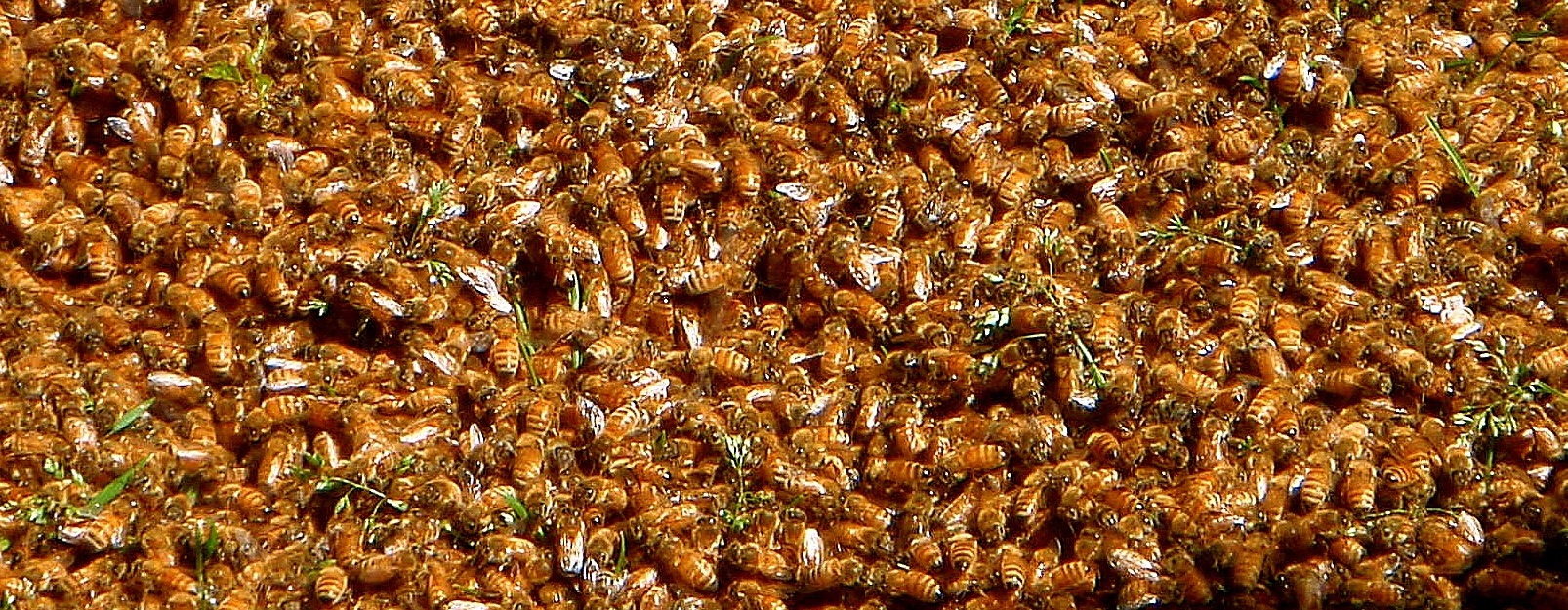
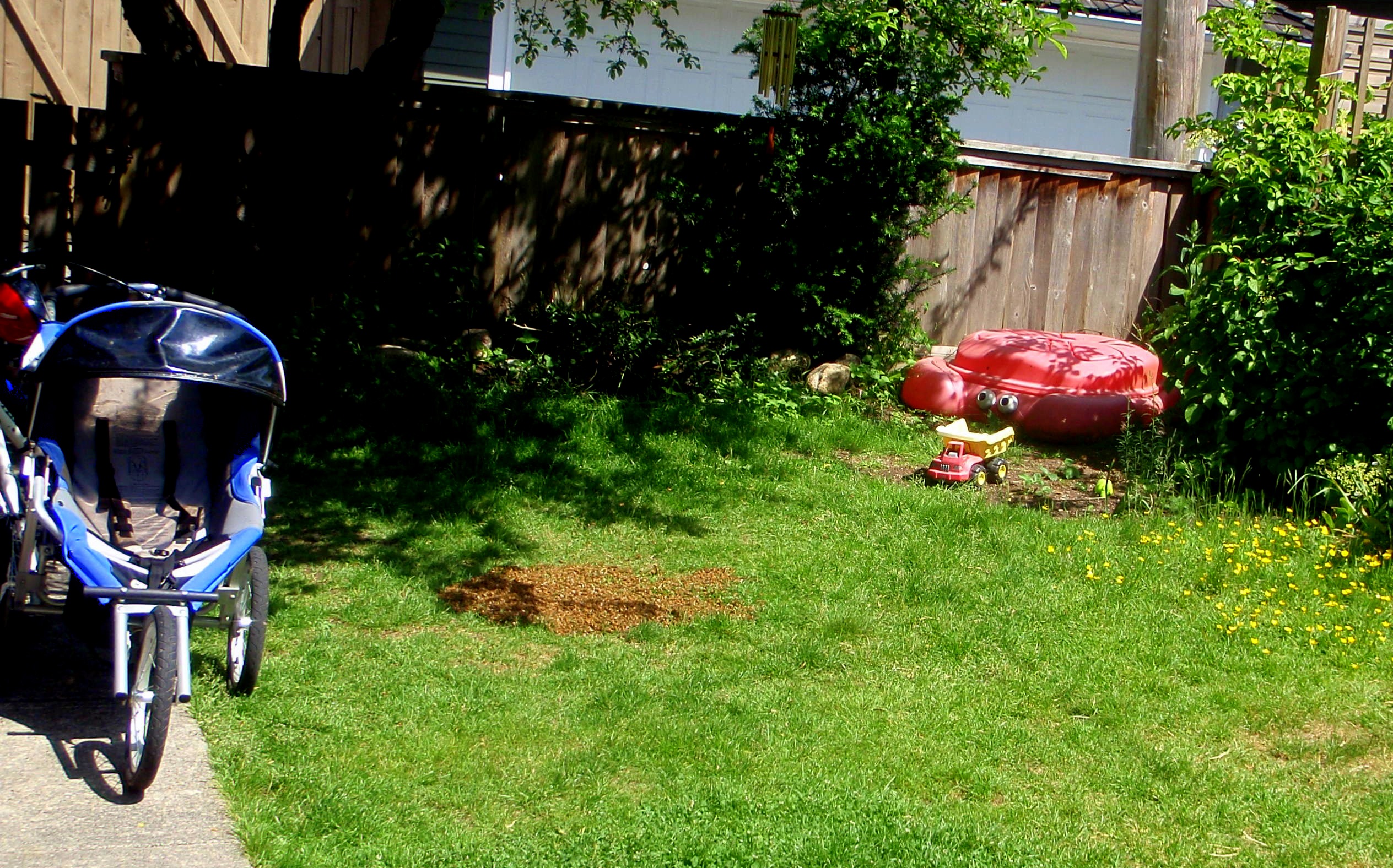
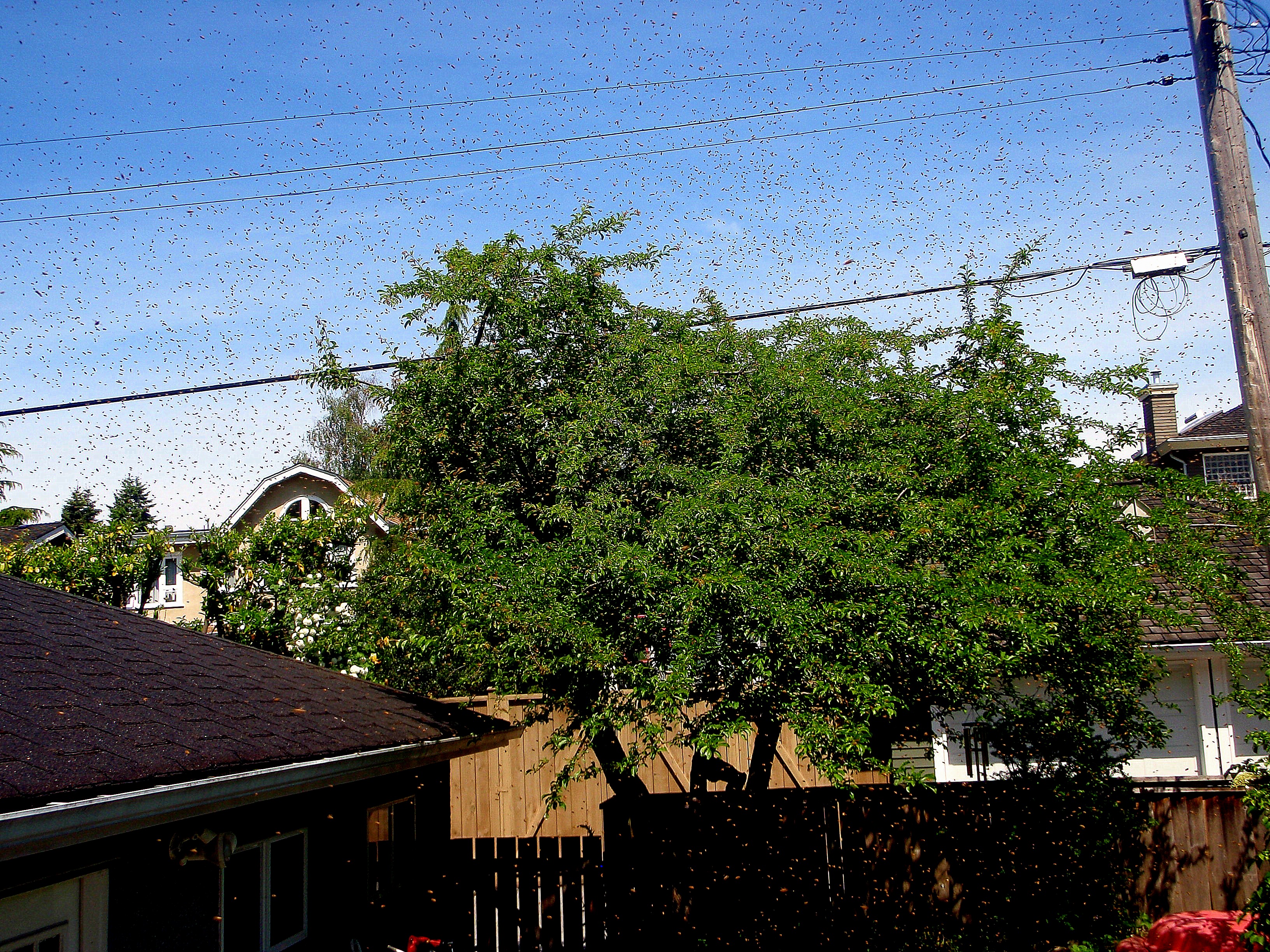
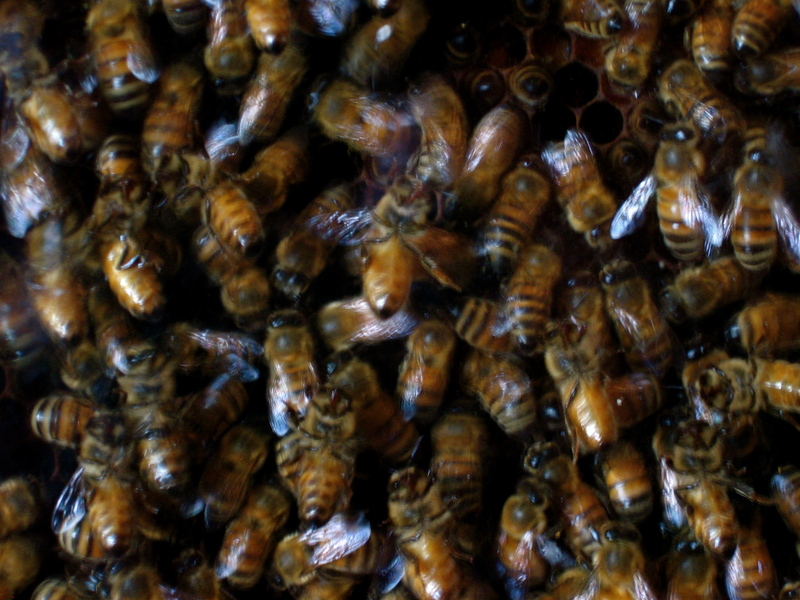
Last weekend we were treated to an unusual wildlife encounter. A colony of bees, likely in the process of locating and founding a new hive, settled in our garden on Saturday afternoon.  P5310076-1 After trying out a branch in our plum tree, they dropped to the ground and settled for the next 24 hours or so.  Individual bees, perhaps scouts, shuttled in and out of the cluster until sunset and then again throughout Sunday morning.  Finally on Sunday evening they rose in one great cloud (well, they did leave some stragglers) and made their way to Pacific Spirit Park.    bees take flight

It's great to see honey bees around and, it seems, in good health.

Colony Collapse Disorder

One of the great triumphs of civilization, (and one that may just help put an end to us) is that most of us in the developed, urban world can afford to ignore the barely visible cloud of ecosystem functions and services that we float comfortably on.  Barely Bees
conscious of the fragility of some of these essential systems, we are slow to grasp the importance of what one might consider "the little things".  Listening to Bill Maher’s Real Time last night I first heard of Colony Collapse Disorder and the apparent loss of 50% (!) of honeybee hives in North America and Europe.  This made the news as it was speculated that cell phones are a contributing factor. 

Grrrlscientist (Pathogens Causing HoneyBee Deaths?) notes another take on the phenomenon i.e. that it may be caused by a pathogen.  Regardless of the cause, the loss of substantial numbers of a key pollinating insect could have absolutely enormous consequences for our food supply.  This is spooky:

During the previous year, bee keepers and other experts have observed
tremendous declines in honeybee populations — often entire colonies
disappear suddenly and without warning, a situation referred to as
"collapse" so scientists refer this phenomenon as "Colony Collapse
Disorder" or CCD. Thus far, approximately 50 percent of bee hives have
collapsed in this manner. As a result, experts fear that this loss of
honeybees will have an enormous horticultural and economic impact
around the world, leaving important food crops such as fruits,
vegetables, and almonds unpollinated, so they are working hard to find
the cause of this mysterious syndrome, and this cutting-edge technology
might have provided them with an answer.

Microarrays and Climate Change

From  Technology Review, new applications of genomics tools, in this case microarray technology, to model the effects of climate change on marine species at the gene expression level:

Using novel genomic technology, marine biologists have found troubling
clues that marine life could be extremely vulnerable to climate change.
By mimicking future ocean climes and using gene chips to detect how
marine organisms respond, the researchers can evaluate how well
different organisms deal with environmental stress. The findings, while
still preliminary and incomplete, are worrisome…

…So far, the team has focused its attention on a set of proteins, known
as heat-shock proteins, which kick in when an animal is under stress.
Almost all animals carry copies of these proteins, which can repair
other proteins that have been bent out of shape by heat and additional
environmental stresses. According to early results from gene-chip
studies, sea-urchin larvae raised at current carbon levels activate
their heat-shock proteins when faced with warming water temperatures.
But larvae raised at the best-case-scenario carbon level no longer
activate these genes under stress and therefore can’t respond to a
warming climate. "I don’t want to say we will lose all sea urchins,"
says Hoffman. "But there will be some part of the population that can’t
develop."…

…Although it’s hard to predict exactly how that loss will affect the
environment, it’s likely to change the structure of the entire
ecosystem. Without algae-eating urchins, "you might predict that algae
will become dominant in a particular area, which then might affect
availability of fish that live there, which could affect the fishing
industry or even tourism," Hoffman says.

While illuminating some of the useful applications of genomics to conservation, I find this article a bit alarmist.  As pointed out by a commenter on the article, sea urchins have faced warmer oceans in the past and survived.  There will be transition and loss, and a new equilibrium. The key point for we humans is whether the transition and new equilibrium significantly affects us, and how.
DNA and Ivory

Elephant
This article in the Globe and Mail (Genetic maps help unravel black market in ivory
) underscores the promise of genomics tools for compliance and enforcement of conservation laws. 

Dr. Wasser was asked to help in 2002, when the authorities in
Singapore seized a huge shipment of contraband ivory. Investigators
from a number of countries wanted to know where it had come from, and
he had developed a technique for matching the genetic material found in
tusks to the DNA found in feces of elephants, allowing him to pinpoint
where the tusks came from.

There were 532 tusks in the shipment, plus more than 40,000 hunks of
ivory already cut up to make the ivory seals. Between 3,000 and 6,500
elephants were likely killed to get that much ivory, the scientists
say.

The DNA showed the elephants came from central Zambia, a country
that has not been given permission to sell its ivory stockpiles
internationally. The government wanted to sell ivory taken from animals
killed prior to 1989, and said that only 135 elephants had been
illegally killed over the past 10 years.

Through genetic maps and the identification of biomarkers for specific populations, authorities will increasingly be able to determine the provenance of a given piece of ivory, can of abalone, or sockeye fillet.  A quick and reliable test for biomarkers of threatened species will tighten the screws on the middlemen who trade with dodgy sources, and that is a good thing. 

The original PNAS article is here.

Strange New Creatures Found in Antarctica

Link: LiveScience.com

Following ice shelf collapses
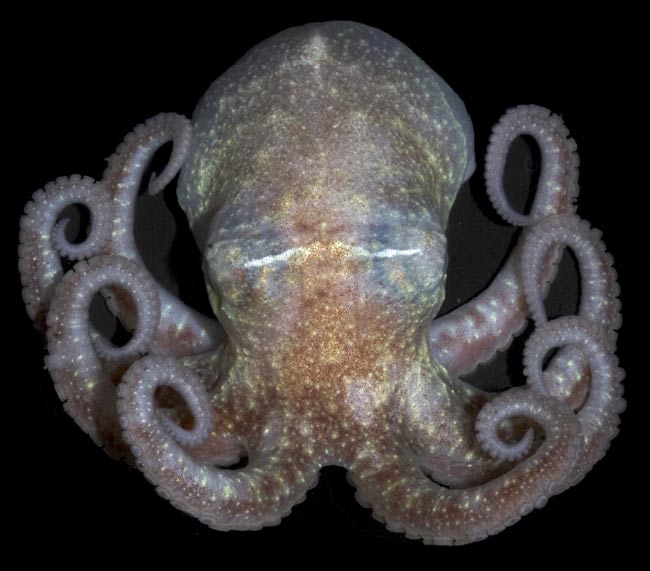
in Antarctica, researchers have gained access to sea bed areas previously accessible only through holes drilled through 100 m – thick ice. Among the new creatures discovered is the Antarctic octopus (Paraledone turqueti) (below- Credit: E. Jorgensen, NOAA 2007):070225_antarctic_octopus_02 

"One of
the main aims of the expedition was to survey both indigenous
life-forms and creatures that had moved in after the collapse to take
advantage of the newly opened environment.

Gutt said that 95 percent of the animals the
expedition found were probably indigenous and just 5 percent had moved
in after the ice shelves collapsed, but even that small percentage
indicated a shift in biodiversity and species composition in the area which will probably continue.

“Life at the sea floor obviously reacts very slowly
to this very climactic change in the environmental conditions," Gutt
said. “[It] needs hundreds to thousands of years until a new community
has fully developed, if this will happen at all.”

One creature new to the neighborhood was the fast-growing, gelatinous sea squirt, which the scientists found in several dense patches."