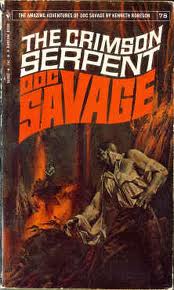
well i finished the crimson serpentCrimson serpent doc savage delivers hearty satisfying pulp fiction.  written in the 30's, it's a view of the world excited by science, technology, and the broadening horizons of global exploration.  recommended reading for anyone.


all thriller no filler

i would love to provide lengthy and interesting reviews of my last three reads, but i really don't have it in me right now.  Nonetheless, I would encourage you to profit from Steve Jobs, Wolf Hall, and The Better Angels of our Nature.

Walter Isaacson reveals Jobs as genius and asshole, with everthing i wanted to learn about the game changing advances of my formative years (including Sony's reaction to the Walkman's extinction – how excruciating to see the iPod take it all away). Lots of useful stuff about navigatng a business that's part art and part science, a subject close to my own heart.

Hilary Mantel turns the Thomas Cromwell mythos on its head, and the murky Tudor villan emerges as the hero of the piece:

"It is said he knows by heart the entire New Testament in Latin, and so as a servant of the cardinal is apt – ready with a text if abbots flounder. His speech is low and rapid, his manner assured; he is at home in courtroom or waterfront, bishop’s palace or inn yard. he can draft a contract, train a falcon, draw a map, stop a street fight, furnish a house and fix a jury. He will quote you a nice point in the old authors, from Plato to Plautus and back again. He knows new poetry, and can say it in Italian. He works all hours, first up and last to bed. He makes money and he spends it. He will take a bet on anything."

Finally Steven Pinker explains why violence is declining, our ancestors inhabited a strange and savage world, and offers useful thoughts on how we can keep the good times rolling.  one of many solid reviews here.

Read'em all.

now on to Doc Savage

Beowulf

BeowulfSeamus Heaney's translation has been staring over me from the bookshelf aside too many unread comrades, and I finally took it down and read it. Glad that I did, as it brought me to a world and story that lies at the root of contemporary fantasies by Tolkien and his successors, and dusted lightly with emergent Christianity. This translation is easily read and enjoyed. The NYT review captures it well:

At last count some 65 English translations of ''Beowulf'' have been published. The poem's many translators seem to have followed the same logic that drives people to open new restaurants: they're disappointed with what's out there and convinced that they can do better. Only in retrospect do they realize why they were doomed to fail. As generations of students can testify, a phrase-by-phrase rendering of ''Beowulf'' into modern English isn't that hard to manage; in the process, however, the poem's lifeblood is drained, and along with it the qualities that make ''Beowulf'' so remarkable. Paradoxically, the seeming familiarity of the language is part of the problem: you don't need to know a lot of Anglo-Saxon to guess that when the narrator exclaims ''bæt wæs god cyning,'' he is saying ''that was a good king.''

This sense of familiarity, however, is for the most part an illusion, since only the slenderest of threads binds us to the Old English ''word-hoard'' and vision of the ''Beowulf'' poet. Translators (usually scholars) faithful to the poem's complex style — one that is highly formulaic, rich in compounds, apposition, repetition and parallelism, conveyed in a resounding alliterative line — end up producing jog-trot verse, of which the following is a painful and typical example: ''What ho! We've heard the glory / of Spear-Danes, clansmen-kings, / Their deeds of olden story, — – / how fought the aethelings!''

On the other hand, those (usually established poets) who take considerable license may succeed in capturing the spirit of the poem but lose touch with its intricate diction and verse rhythms: ''Listen! / The fame of Danish kings / in days gone by, the daring feats / worked by those heroes are well known to us.'' The Norton editors were so worried that Heaney would fall into the latter camp that they assigned to him an Anglo-Saxon scholar ''who was a kind of minder.'' Heaney seems to have profited from their exchanges and to have been good-humored about the arrangement. You can see the effect in his revision of an early set piece from the poem, which he titled ''A Ship of Death'' and published in ''The Haw Lantern'' (1987): the lines ''A ring-necked prow rode in the harbour, / clad with ice, its cables tightening'' are replaced 13 years later by: ''A ring-whorled prow rode in the harbour, / ice-clad, outbound, a craft for a prince.'' The Anglo-Saxon original on the facing page enables readers to appreciate why Heaney here rejects the vivid ''its cables tightening'' in favor of the more literal ''outbound,'' thereby more closely approximating the diction, compounded style and falling rhythm of the original half-line, ''isig ond ut-fus,'' that is, icy and out-ready. Countless small examples like this add up to a translation that manages to accomplish what before now had seemed impossible: a faithful rendering that is simultaneously an original and gripping poem in its own right.

via www.nytimes.com

crime

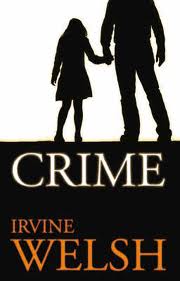
without giving too much away i am satisfied with the course of Irvine Welsh's Crime, just completed on our  Crimenewish
Kindle.   Ray Lennox (with whom we first exchanged glances in Filth) with the Edinburgh Serious Crimes unit is recovering on vacation in Florida from the aftermath of a particularly wrenching child murder, when he finds himself pulled into a fresh horror of paedophilia and Crime.  Welsh can be such a sadistic sod with his characters, following them to the end of his novels feels like watching a toddler careening around a room of hard cornered furniture…any minute now…..i can't look….

 A serious Welsh fan am I, and though this doesn't reach the scabrous heights of some of his previous masterworks, it renders a solid performance and worth the time.

shared fate

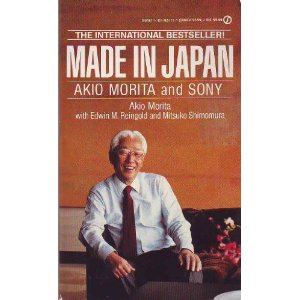
Finally getting to a book I was supposed to have read in 1990 (assigned in a graduate course), I just completed Akio Morita's Made is JapanMade in japanMorita, a cofounder of SONY, offers his memories perspectives on Japan's post war economic miracle, and the birth of his company as a global electronics pioneer.  The book was published in 1986 and introduces some of the confrontations that characterized Japan / USA relations in the late 80s and 90s.  I'm actually happy to have only read this now, as it resonates more with where i am now, than the callow grad student of 1990.  In particular, the following quote stays with me:

  The most important mission for a Japanese manager is to develop a healthy relationship with his employees, to create a family-like feeling within the corporation, a feeling that employees and managers share the same fate. Those companies that are most successful in Japan are those that have managed to create a shared sense of fate among all employees, what Americans call labor and management, and the shareholders.

 A sense of shared fate and trust is critical in building a knowledge based firm that relies on attracting and retaining the best.  Wisdom from an industry giant.


The Pregnable Fortress

British Singapore took far less time to surrender than I took to finish this book.  At over 600 pages, much of it dumps of primary and secondary information, this felt like reading the appendices of a book that was missing, something that took me at a high level through the fall of Singapore before plunging into detail.  If ever I have missed forest for trees, it was reading The Pregnable Fortress.  At the risk of sounding overly negative, I think this would be a great second book to read about the fall, after getting sense of the overall narrative and context from another source.  
SINGAPORE The focus of most World War II writing, at least that I've been exposed to, has been the war in Europe, both western and eastern fronts, and secondarily the American effort in the Pacific after Pearl Harbor.  Until living in Singapore I had no sense of the importance Singapore had as an eastern bastion of the British Empire, and was widely viewed as "impregnable" (as the Titanic was viewed as unsinkable).  Expected to hold for weeks or months, in theory until the Royal Navy's Mediterranean fleet could be dispatched for relief, Singapore fell to the Japanese in 6 days.  In Churchill's words it was "the worst disaster and largest capitulation in British history".  Britain's stature in the Far East was permanently crippled. 

What I learned: While General Percival, Singapore's military commander, has been historically blamed for the surrender, the loss of Singapore arose from a blend of indifference and incompetence in London, including years of neglect by Churchill himself (manifested for example in a lack of adequate air cover), mass desertions by Australian and Indian troops, and petty infighting among senior British officials in Singapore and Malaya.   The British underestimated the Japanese almost to the end, and paid a rough price (though not I think as great a price as the Chinese population).

Unfortunately the Japanese were pushed too far into the periphery in the book – the dire situation with their supply lines and ammunition were presented almost as afterthought.  They were on the verge of ending the their advance when Percival capitulated, but little detail is presented on their situation or leadership.

A dense read, but worth it for a pacific war buff.

Christopher Hitchens is very ill

Adding gloom to a drizzled day, it appears Christopher Hitchens' cancer is very much worse than I had hoped. I've only just begun his autobiography and passed over the death of his father from the very same cancer. I'm finding it difficult to anticipate the loss of such a gifted thinker and writer.

In one way, I suppose, I have been “in denial” for some time, knowingly burning the candle at both ends and finding that it often gives a lovely light. But for precisely that reason, I can’t see myself smiting my brow with shock or hear myself whining about how it’s all so unfair: I have been taunting the Reaper into taking a free scythe in my direction and have now succumbed to something so predictable and banal that it bores even me. Rage would be beside the point for the same reason. Instead, I am badly oppressed by a gnawing sense of waste. I had real plans for my next decade and felt I’d worked hard enough to earn it. Will I really not live to see my children married? To watch the World Trade Center rise again? To read—if not indeed write—the obituaries of elderly villains like Henry Kissinger and Joseph Ratzinger? But I understand this sort of non-thinking for what it is: sentimentality and self-pity. Of course my book hit the best-seller list on the day that I received the grimmest of news bulletins, and for that matter the last flight I took as a healthy-feeling person (to a fine, big audience at the Chicago Book Fair) was the one that made me a million-miler on United Airlines, with a lifetime of free upgrades to look forward to. But irony is my business and I just can’t see any ironies here: would it be less poignant to get cancer on the day that my memoirs were remaindered as a box-office turkey, or that I was bounced from a coach-class flight and left on the tarmac? To the dumb question “Why me?” the cosmos barely bothers to return the reply: Why not?

via www.vanityfair.com

a tangled bank

In celebration of the day, one of my favourite (and the final) passages in Origin:

It is interesting to contemplate a tangled bank, clothed with many
plants of many kinds, with birds singing on the bushes, with various
insects flitting about, and with worms crawling through the damp earth,
and to reflect that these elaborately constructed forms, so different
from each other, and dependent upon each other in so complex a manner,
have all been produced by laws acting around us. These laws, taken in
the largest sense, being Growth with Reproduction; Inheritance which is
almost implied by reproduction; Variability from the indirect and
direct action of the conditions of life, and from use and disuse: a
Ratio of Increase so high as to lead to a Struggle for Life, and as a
consequence to Natural Selection, entailing Divergence of Character and
the Extinction of less-improved forms. Thus, from the war of nature,
from famine and death, the most exalted object which we are capable of
conceiving, namely, the production of the higher animals, directly
follows. There is grandeur in this view of life, with its several
powers, having been originally breathed by the Creator into a few forms
or into one; and that, whilst this planet has gone cycling on according
to the fixed law of gravity, from so simple a beginning endless forms
most beautiful and most wonderful have been, and are being evolved.

Oranges and Lemons

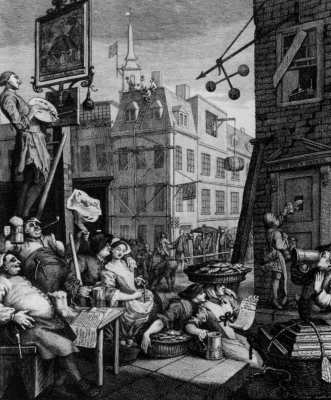
Hogarthbeeralley During my all too brief residence in London as a fishmonger in Selfridges, I recall the strange wonder I experienced at several of my coworkers who had never left the city.  I chalked it up to perhaps the incurious nature, or financial circumstances, of my colleagues.  How could one city be enough? I thought.  20 years later, finishing Peter Ackroyd's London: A Biography, I am reminded of this.  Recognizing that this immense city defies traditional, chronological treatment, Ackroyd's biography (rather than a history) approaches London as an ancient living thing, growing, developing, with a multitude of tissues and characters.  Roman tombs under medieval chapels under Victorian tenements.  The Saxon roots of cockney dialect. The Theatre of public executions.  The Theatre.  Food and markets through the centuries. The Thames and the blitz.  London and child sacrifice in nursery rhymes.  During my brief time there I scarcely saw the surface, let alone scratched it.  Through the lens of a biographer of Dickens and Blake, this is a great read.

Exile: Pramoedya Ananta Toer

Pramoedya Ananta Toer, who died in 2006, was arguably Indonesia's greatest writer and one of the world's most engaging novelists.  I don't feel like I am reading his works as much as wrapping myself in them.  I named one of my children after a character in Bumi Manusia (This Earth of Mankind).

Following the 1965 coup that saw Suharto take power, Pram was imprisoned  for decades, much of that time on Buru Island.  

Exile is an account of conversations with Pram not long before his death.  The topics run from politics to literature to Indonesian and Javanese culture.

Exile

Pram's pain and disappointment at the course of Indonesia's development is obvious in his cutting reflections on culture, government corruption, and the dominance of the US.  He rightly lays a great deal of blame for Indonesia's ills on the Suharto regime – understandable given the years of imprisonment he suffered at Suharto's hands, as well as the very real corruption and misgovernance that characterized the New Order, particularly in the final few years.   

I found his reflections on culture and his view that the Javanese propensity to submit to authority figures shackles Indonesia's development fascinating.  He is clearly a fan of Sukarno – time and distance allow him to ignore or gloss over Sukarno's profound failings in the later years of his presidency.  All was well, in Pram's view, before the coup, and if Sukarno had been allowed to continue Indonesia would have proceeded to a bright future.  

 Exile is a valuable complement to his other published works.  It's not as compelling as the Mute's Soliloquy, his account of imprisonment on Buru and elsewhere, and these conversations sadly reveal far more unhappiness and far less hope about his homeland than I expected.  For all the faults he describes, Indonesia has made a relatively peaceful transition from authoritarian rule to democracy, vacated East Timor, and avoided the large scale sectarian bloodbaths that have claimed other nations at a similar stage of development.  Terrorism seems to have been brought to heel and the world's largest muslim nation remains a reliable U.S. partner.  Civil society continues to roll, sometimes lurch, along and renew with every turn of the monsoon.  I guess Pram remained an exile until the end.