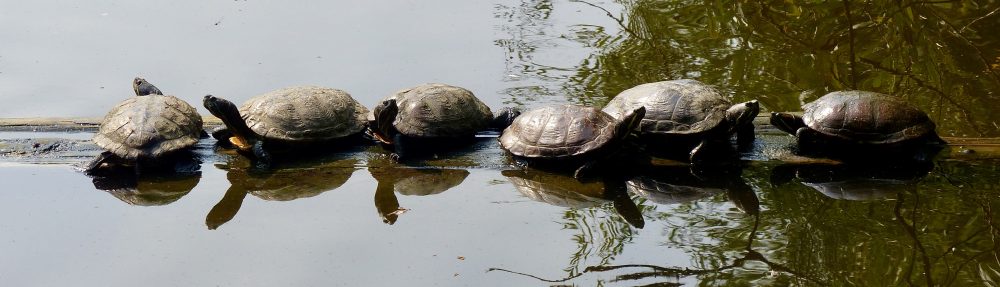
Scientists Create World’s Largest Coral Gene Database

Promising findings from genomic analysis of corals:

Corals face four major threats from humans: Destruction of reefs by grenades and poison used to kill fish for food; nutrient pollution, usually from sewage or agricultural runoff, that overstimulates harmful algae; increased heat in the upper ocean, which causes most coral bleaching that can kill reefs; and acidification of the ocean, according to Falkowski.”Corals are the most diverse marine ecosystems on the planet,” he said. “But their value to marine ecosystems — and to our own use of marine resources — is very underappreciated.”

Perhaps the extreme diversity of coral systems help along an adaptive response to climate change:

Bhattacharya and coauthors found dozens of genes that allow corals to coordinate their response to changes in temperature, light and pH (acidity vs. alkalinity) and deal with stress triggered by the algae that live with them and exposure to high levels of light.
Surprisingly, some of these stress-related genes are of bacterial origin and were acquired to help corals survive. An intriguing theory that arose from the study is that the vast genetic repertoire of corals may help them adapt to changing ocean conditions.

Source: Scientists Create World’s Largest Coral Gene Database
Could Fighting Global Warming Be Cheap and Free?

and now for some optimism

On one side, there has been dramatic progress in renewable energy technology, with the costs of solar power, in particular, plunging, down by half just since 2010. Renewables have their limitations — basically, the sun doesn’t always shine, and the wind doesn’t always blow — but if you think that an economy getting a lot of its power from wind farms and solar panels is a hippie fantasy, you’re the one out of touch with reality.

On the other side, it turns out that putting a price on carbon would have large “co-benefits” — positive effects over and above the reduction in climate risks — and that these benefits would come fairly quickly. The most important of these co-benefits, according to the I.M.F. paper, would involve public health: burning coal causes many respiratory ailments, which drive up medical costs and reduce productivity.

via www.nytimes.com

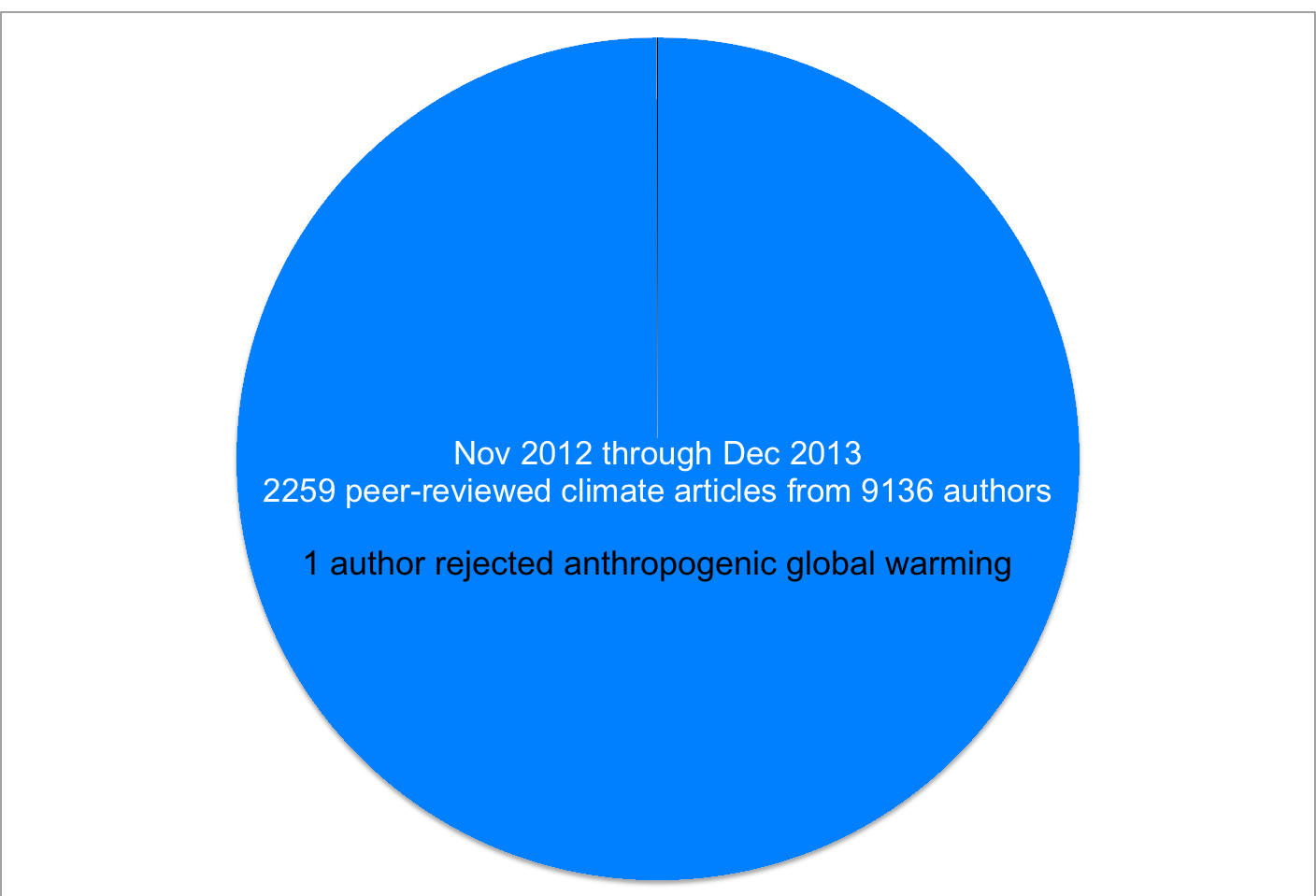
About that consensus on global warming: 9136 agree, 1 disagrees.

From Scientific American:

Jan12014piechartIt’s worth noting how many authors agree with the basic fact of global warming – more than nine thousand. And that’s just in a single year. Now I understand as well as anyone else that consensus does not imply truth but I find it odd how there aren’t even a handful of scientists who deny global warming presumably because the global warming mafia threatens to throttle them if they do. It’s not like we are seeing a 70-30% split, or even a 90-10% split. No, the split is more like 99.99-0.01%.

Isn’t it remarkable that among the legions of scientists working around the world, many with tenured positions, secure reputations and largely nothing to lose, not even a hundred out of ten thousand come forward to deny the phenomenon in the scientific literature? Should it be that hard for them to publish papers if the evidence is really good enough? Even detractors of the peer review system would disagree that the system is that broken; after all, studies challenging consensus are quite common in other disciplines. So are contrarian climate scientists around the world so utterly terrified of their colleagues and world opinion that they would not dare to hazard a contrarian explanation at all, especially if it were based on sound science? The belief stretches your imagination to new lengths.

Those who think scientists keep silent on global warming presumably because they fear the barbs of the world demonstrate a peculiar kind of paranoia, especially since what they fear largely does not exist. More prosaically they need to recall Carl Sagan’s words again because the claim that scientist don’t dare to speak out against global warming in the literature is, quite definitely, an extraordinary claim. And it doesn’t seem to stand up to even ordinary evidence.

via blogs.scientificamerican.com

Rising sea levels putting landmarks at risk

Vancouver is at risk of losing landmark communities like Granville Island and False Creek unless the city starts taking measures to defend its shoreline against rising sea levels, an urban planner warns.

Andrew Yan, a planner and researcher with Bing Thom Architects, estimates the city will have to spend upwards of $510 million to build and upgrade the dikes and seawalls – plus billions more to buy the land to put them on – over the next century.

"What's under threat in Vancouver is a lot of our identity; our beaches, our seawall … this is what makes Vancouver such a livable place," Yan said. "We just need to look at Granville Island and its exposure to sea level rise and what may be required to defend it."

Vancouver isn't the only city under threat.

Richmond's Steveston, which has experienced huge residential growth along its waterfront in recent years, will face significant pressures in the future, Yan said, while south Surrey's Crescent Beach is already being threatened by a more insidious force: increasing groundwater from rising ocean tides.

"It affects every municipality that touches the water," Yan said. "Sea level rise isn't going to separate itself from the boundaries of Vancouver, Burnaby, Richmond or Surrey. We'd better be serious about this. It's important to plan now as opposed to 50 or 70 years from now."

……..

The report illustrated a number of sea level rise scenarios, from one to six metres, which could affect between three and 13 per cent of the city's land mass. For instance, sea level rise at the three-metre interval, combined with a severe storm in 2100, would affect most of the city's shoreline, including the harbour, the southern edge of the city and Granville Island.

And it gets worse: At the four-metre interval, False Creek would revert to its 19th-century boundaries, while Gastown, Chinatown and the harbour would be heavily affected. And at five-and six-metre intervals, the report warns, downtown Vancouver would become an archipelago and the city's coast-line would be "unrecognizable" compared to today's.

via www.vancouversun.com

Climate Change Study Ties Recent Heat Waves To Global Warming

The relentless, weather-gone-crazy type of heat that has blistered the United States and other parts of the world in recent years is so rare that it can’t be anything but man-made global warming, says a new statistical analysis from a top government scientist.

The research by a man often called the “godfather of global warming” says that the likelihood of such temperatures occurring from the 1950s through the 1980s was rarer than 1 in 300. Now, the odds are closer to 1 in 10, according to the study by NASA scientist James Hansen. He says that statistically what’s happening is not random or normal, but pure and simple climate change.

“This is not some scientific theory. We are now experiencing scientific fact,” Hansen told The Associated Press in an interview.

Hansen is a scientist at NASA’s Goddard Institute for Space Studies in New York and a professor at Columbia University.

via www.huffingtonpost.com

Greenland ice sheet melted at unprecedented rate during July

Greenland ice sheet composite.The Greenland ice sheet melted at a faster rate this month than at any other time in recorded history, with virtually the entire ice sheet showing signs of thaw.

The rapid melting over just four days was captured by three satellites. It has stunned and alarmed scientists, and deepened fears about the pace and future consequences of climate change.

In a statement posted on Nasa's website on Tuesday, scientists admitted the satellite data was so striking they thought at first there had to be a mistake.

"This was so extraordinary that at first I questioned the result: was this real or was it due to a data error?" Son Nghiem of Nasa's Jet Propulsion Laboratory in Pasadena said in the release.

via www.guardian.co.uk

warmer and warmer and warmer

frogs in a heating pot, according to NASA:

The global average surface temperature in 2011 was the ninth warmest since 1880, according to NASA scientists. The finding continues a trend in which nine of the 10 warmest years in the modern meteorological record have occurred since the year 2000. NASA's Goddard Institute for Space Studies (GISS) in New York, which monitors global surface temperatures on an ongoing basis, released an updated analysis that shows temperatures around the globe in 2011 compared to the average global temperature from the mid-20th century. The comparison shows how Earth continues to experience warmer temperatures than several decades ago. The average temperature around the globe in 2011 was 0.92 degrees F (0.51 C) warmer than the mid-20th century baseline.

next on my reading list

Dave Sawyer's new report,Mind the Gap

In "Mind the Gap" Dave Sawyer explores where we stand with regard to current Canadian climate change policies and how Canada can close the gap between emissions reductions expected from current federal and provincial policies and our 2020 emissions mitigation target of 17 per cent below 2005 levels. Suggestions include expanded regulatory frameworks, as well as a renewed look at both domestic and international abatement options from offsets.

The brutal logic of climate change | Grist

Head-in-the-sand
The consensus in American politics today is that there's nothing to be gained from talking about climate change. It's divisive, the electorate has more pressing concerns, and very little can be accomplished anyway. In response to this evolving consensus, lots of folks in the climate hawk coalition (broadly speaking) have counseled a new approach that backgrounds climate change and refocuses the discussion on innovation, energy security, and economic competitiveness.

This cannot work. At least it cannot work if we hope to avoid terrible consequences. Why not? It's simple: If there is to be any hope of avoiding civilization-threatening climate disruption, the U.S. and other nations must act immediately and aggressively on an unprecedented scale. That means moving to emergency footing. War footing. "Hitler is on the march and our survival is at stake" footing. That simply won't be possible unless a critical mass of people are on board. It's not the kind of thing you can sneak in incrementally.

It is unpleasant to talk like this. People don't want to hear it. They don't want to believe it. They bring to bear an enormous range of psychological and behavioral defense mechanisms to avoid it. It sounds "extreme" and our instinctive heuristics conflate "extreme" with "wrong." People display the same kind of avoidance when they find out that they or a loved one are seriously ill. But no doctor would counsel withholding a diagnosis from a patient because it might upset them. If we're in this much trouble, surely we must begin by telling the truth about it.

via www.grist.org

I try not to read articles like this because I like to lean on my defense mechanisms as described above, put my metaphorical fingers in my ears, and yell "la la la la".  Lets me sleep at night (usually).  But the science keeps tugging at my attention, and telling me that we are on a fairly steady path to global ecosystem instability.

How bad might it get? We have been blessed with a long stretch of climate and biosphere stability,at least since the last glacial recession, allowing our civilization to take hold and advance. The comfortable developed societies I think have lost a proper perspective on how fragile it all is.  What will happen if the rivers run dry and food prices triple?  Looks like we may find out.

okee, back to sleep,…….wonder what the Kardashians are up to today…..

Peter Kent on the greenhouse effect

The greenhouse effect and planet Earth Broadcast Date: Jan. 24, 1984There's weather, and then there's climate. Weather patterns come and go, but forecasting has become much more accurate through improved meteorological techniques. Climate change is harder to predict. But, as the CBC's Peter Kent shows in this 1984 documentary, it's happening. Carbon dioxide levels in the Earth's atmosphere have been steadily rising, and by the year 2050 the average global temperature may rise by five degrees Celsius due to the greenhouse effect.

via archives.cbc.ca

Peter Kent's 1984 reporting on Climate Change, in the CBC archives.  The full video is here.  The basic science is so simple, and has been a concern for so long, it's remarkable to consider how successful the denialist effort has been.