Environmental Assessment in Practice

The federal Minister of Environment and Climate has assembled an Expert Panel to evaluate environmental assessment in Canada, receive input from First Nations, industry, environmental groups, the public, and masticate this into revisions to the Canadian Environmental Assessment Act.

I managed to squeak in this last minute submission.  One aspect of my input I would like to have spent more time on is the effect that shrinking the scientific resources in the public service has had on environmental stewardship. I think the path to improved environmental assessment lies as much through an investment in robust institutions and human resources as it does through legislative change.

Full text beyond  the page break: 
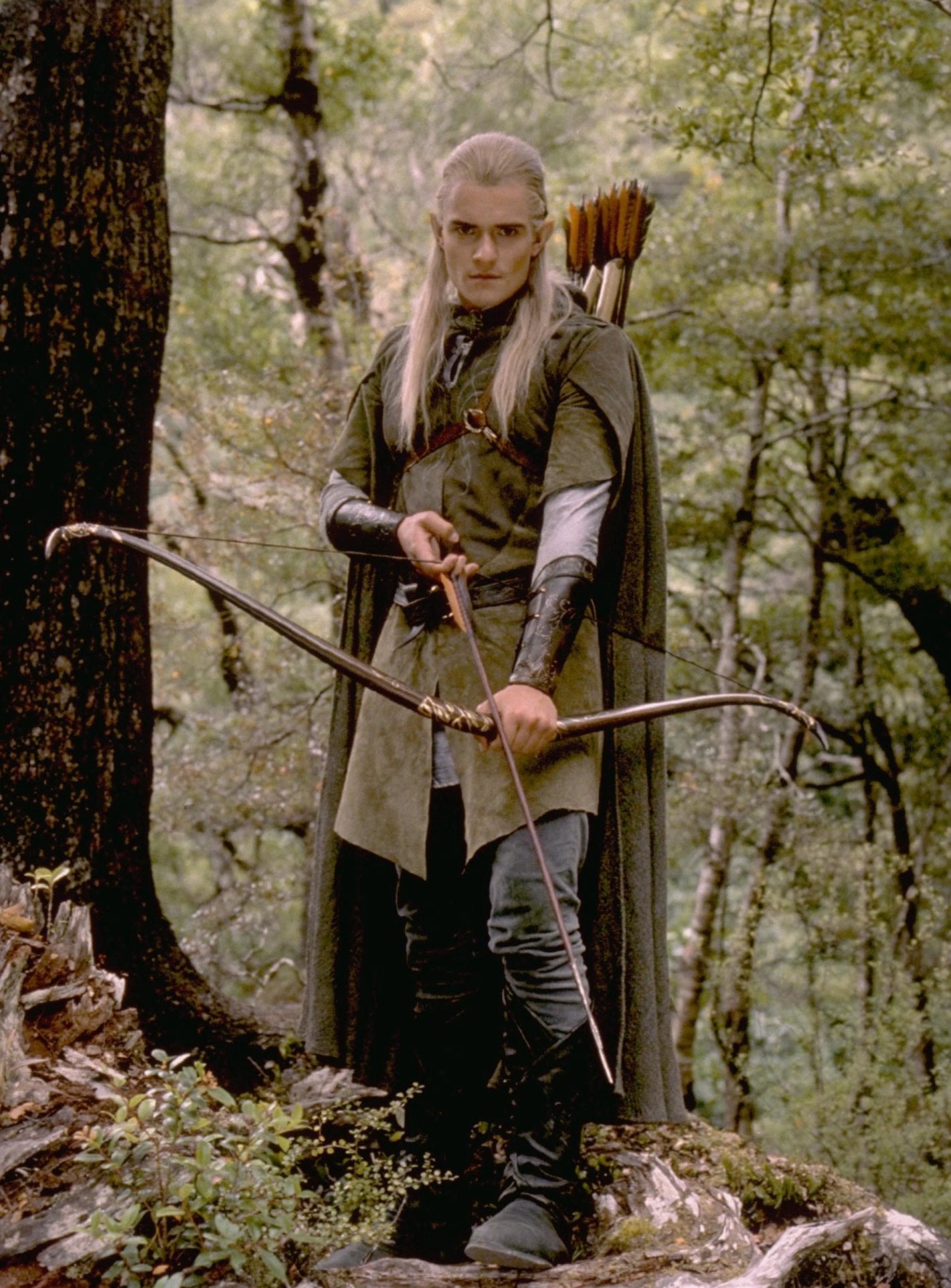
Elf lobby blocks Iceland road project

this is bloody brilliant

LegolasElf advocates in Iceland have joined forces with environmentalists to urge authorities to abandon a highway project that they claim will disturb elf habitat, including an elf church.

The project has been halted until the supreme court of Iceland rules on a case brought by a group known as Friends of Lava, who cite both the environmental impact and the detrimental effect on elf culture of the road project.

via www.theguardian.com

social licence to operate

The National Bureau of Asian Research has just made available a paper I co-authored for the Pacific Energy Summit.  Entitled:  "Social License to Operate, how to Get it and How to Keep It" the main findings included:

“Social license” generally refers to a local community’s acceptance or approval of a company’s project or
ongoing presence in an area. It is increasingly recognized by various stakeholders and communities as a
prerequisite to development. The development of social license occurs outside of formal permitting or
regulatory processes, and requires sustained investment by proponents to acquire and maintain social
capital within the context of trust-based relationships. Often intangible and informal, social license can
nevertheless be realized through a robust suite of actions centered on timely and effective communication,
meaningful dialogue, and ethical and responsible behavior. 

My co-author, Celesa Horvath, has posted about the paper here. Apologies for the spelling of "licence" – US editors.


Sunlight and bunker oil a fatal combination for Pacific herring

The 2007 Cosco Busan disaster, which spilled 54,000 gallons of oil into the San Francisco Bay, had an unexpectedly lethal impact on embryonic fish, devastating a commercially and ecologically important species for nearly two years, reports a new study by the University of California, Davis, and the National Oceanic and Atmospheric Administration.

The study, to be published the week of Dec. 26 in the early edition of the journal Proceedings of the National Academy of Sciences, suggests that even small oil spills can have a large impact on marine life, and that common chemical analyses of oil spills may be inadequate.

"Our research represents a change in the paradigm for oil spill research and detecting oil spill effects in an urbanized estuary," said Gary Cherr, director of the UC Davis Bodega Marine Laboratory and a study co-author.

Continue reading

Salmon Genome in Final Phases of Completion

The International Cooperation to Sequence the Atlantic Salmon Genome (ICSASG, the "Cooperation") has awarded the Phase II contract for next-generation sequencing and analysis of the Atlantic salmon genome to the J. Craig Venter Institute (JCVI) in Rockville, Maryland. The JCVI will be sequencing the salmon genome using next-generation technologies, including assembly to integrate Sanger and next-generation sequence, and comparative genomics. This effort is expected to generate a high-quality resource for those responsible for the management of wild salmon stocks and the salmon aquaculture industry, as well as providing a reference genome for work with other salmonids.

via www.bioportfolio.com

CGRASP_fish_2Great to see the Venter Institute involved in this next stage of genomic resource development for salmon. This will work feed environmental genomics, aquaculture, and our understanding of the role of gene duplication in evolution. Exciting!

science and the salmon debate

Tony Farrell schools us on the perils of simplification and media in public debates over scientific questions.  The mysteries of the Fraser River Sockeye, and more broadly the health of pacific salmon, are as heated as they are cryptic, and you need to spend just a little time with scientists in the field to learn that we don't know what the hell is going on with salmon, particularly in the open ocean.  Dr. Farrell:

Scientists routinely agree to disagree, but that doesn't sit well with society-at-large, which increasingly demands instant answers and quick solutions.

Nowhere is this more painfully apparent than in the debate and confusion around the future of salmon in British Columbia, which is the current topic of an expensive federal inquiry, the Cohen Commission.

The problem is that we expect too much, too soon from science. The announcement of an "overnight" discovery is always backed by an awful lot of scientific discovery and testing.

While responsible scientists couch their discoveries with words like could, may and might, prudent caution too often gets lost in translation.

…..

Yet, the public, which is clearly selective in its risk tolerance, demands absolutes from the media when confronted with questions about natural phenomena like salmon.

As Malcolm Gladwell writes in What the Dog Saw: "Rarely is there a clear story – at least, not until afterward, when some enterprising journalists or investigative committee decides to write one."

Have your headlines if you must, because in this fast-paced world we can't always wait for hindsight, but can we agree to not represent hypotheses – no matter how intriguing – as facts?

Mount Milligan forges ahead, Prosperity proposal looks for lifeline

I suppose I should note my tiny contribution to the Prosperity discussion. I got a call from the Vancouver Sun to provide some background on federal and provincial environmental assessment.  I've not worked on the project at all, so can't contribute anything meaningful about the actual decision, but I think it's worth discussing the reality vs. perception when it comes to the process. 

"The feds and the province do their best to work together, and spend a lot of time working together, but they have different mandates and constitutional responsibilities," Brian Yates, of the environmental consulting firm Hemmera, said in an interview.

The federal Fisheries Act, for instance, makes the federal government responsible for maintaining fish habitat.

And while the federal review may look at socio-economic factors in a review, Yates said the province takes a stronger look at those.

via www.vancouversun.com

Both reviews are robust in their own way, but reflect their differing priorities, mandates, and expertise.  It's interesting how 10 minutes of discussion gets reduced to a snippet quote. And it's relatively accurate. 

another worm turns: Noted anti-global-warming scientist reverses course |

after years pressing his thumb on the denialist end of the scale, Bjorn Lomborg sees the light (feels the heat?).

With scientific data piling up showing that the world has reached its hottest-ever point in recorded history, global-warming skeptics are facing a high-profile defection from their ranks. Bjorn Lomborg, author of the influential tract "The Skeptical Environmentalist," has reversed course on the urgency of global warming, and is now calling for action on "a challenge humanity must confront."

………

Lomborg's essential argument was: Yes, global warming is real and human behavior is the main reason for it, but the world has far more important things to worry about.

Oh, how times have changed.

In a book to be published this year, Lomborg calls global warming "undoubtedly one of the chief concerns facing the world today" and calls for the world's governments to invest tens of billions of dollars annually to fight climate change.

via news.yahoo.com

Do we really need an overfed economy? Is it worth it?

Consumerism-illustration Dave Sawyer penned a great letter on climate change policy in today's Globe and Mail.  Money quote:

Even with aggressive action on climate change, our economy will
still be larger than today. All sectors will increase, including that
great cash cow of oil and gas. In this "devastated" future, Canada will
be richer and Wal-Mart will be bigger.

So, are we better off with action on climate change? Economically,
we may be marginally worse off, but our well-being is rooted in more
than economics. For starters, the growing trash heap in which we live
may be a little smaller. And that may just make us all better off.

It really does seem opponents of climate change action are fighting for economic obesity, rather than settling for economic health.

Apple, Climate Change, and the Chamber of Commerce

I agree with almost everything Matt Yglesias says here about the Chamber of Commerce and their stance on climate change, particularly in the context of the departure of high profile companies like Apple from the Chamber.  I don't see how opposition to climate change policy can be in the interests, even short term, of their corporate stakeholders.

The fundamental problem the Chamber of Commerce is going to have on this is that they’re really really wrong. Not like how they’re morally wrong about, say, labor rights or workplace safety rules. They’re analytically mistaken about the interests of the United States business community. If we take action to avert ecological catastrophe, economic growth will still happen. Capitalism will march on. Big companies will be big, and people will earn lots of money managing them. Yes, the present-day owners of coal companies or manufacturers specifically wedded to unusually energy-intensive processes will be in trouble. But “business” in a broad and general sense will keep on keeping on. People will still want gadgets and furniture, will shop at stores, will buy and sell, and generally keep being customers for business.


The real risk is being run by doing nothing. It’s doing nothing that might end the party, and lead to various kinds of nightmare scenarios. And over time, more and more firms are going to see that they have no particular stake in underpricing pollution. One maybe of the Chamber board is a guy from Anheuser-Busch. A serious climate bill’s not going to put him out of business. Nor, to just pick board affiliated companies whose lines of business I recognize, is it going to put State Farm Insurance or IBM or AT&T or Pfizer or Accenture out of business. But the executives at those companies and their kids and their customers are all going to face all the problems caused by untrammeled climate change. And why, genuinely, should a pharmaceutical company or a telecom company be fighting to stop people from stopping an ecological disaster? It genuinely doesn’t make sense.

via yglesias.thinkprogress.org