
Is today. Lots of relevant links at Blogfish's Carnival of the Blue. Also there is DFO's page, the Suzuki Foundation, and the Vancouver Aquarium (who are celebrating the week).
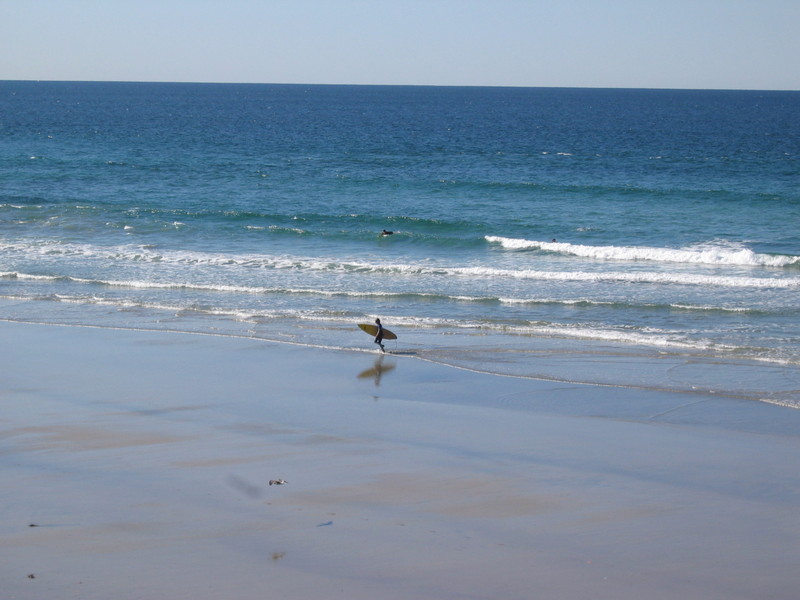
Get wet.


Is today. Lots of relevant links at Blogfish's Carnival of the Blue. Also there is DFO's page, the Suzuki Foundation, and the Vancouver Aquarium (who are celebrating the week).
Get wet.
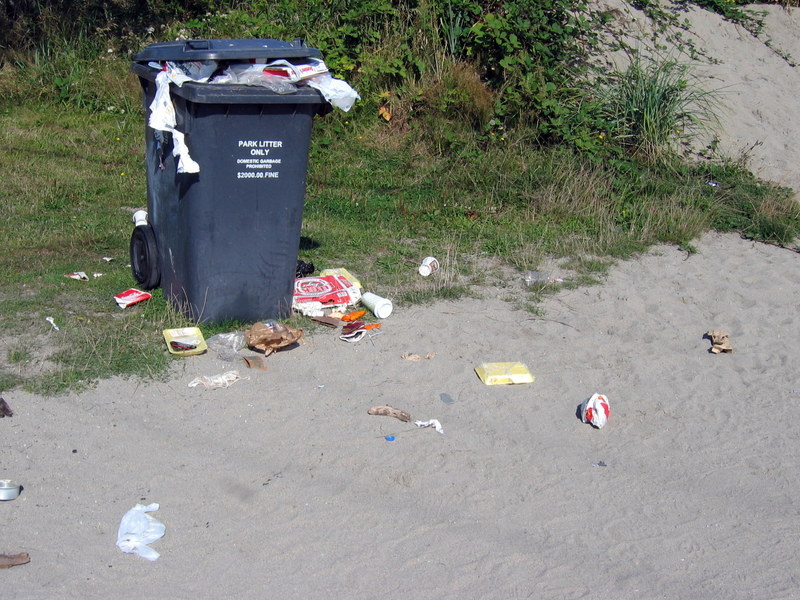
The strike has gone on for almost 2 months. What are people doing with the garbage? Some are dumping it in the parks, others with friends and relatives in nearby municipalities. We are fortunate to have a garage and a few garbage cans to stockpile away from the house. But if we were back in our old apartment in Kits we’d be screwed (particularly with the flow of dirty diapers we’re generating). Some people we know are burning stuff in their fireplaces. I’m sincerely curious about how people are managing their garbage & recycling pileup.
Link: Strike makes woman easy pickings for garbage scam.
A Vancouver woman and three of her neighbours are out $40 after being tricked by a bogus trash collector.
Tara Wohlberg told CBC News a man with a van full of garbage knocked on her door at 5 p.m. Thursday and offered to take her garbage away for $20.
She said she collected up a bag of her own trash and three from her neighbours and paid the man a total $40 to take it all away.
But the next morning, her garbage had been returned to her alley and "the rats, crows and raccoons had an all-nighter with my fish skins and cat litter," she said.
Link: Anita Roddick dies aged 64 | The Guardian | Guardian Unlimited.
Dame Anita Roddick died tonight after suffering a major brain haemorrhage, her family said.
The Body Shop founder died at 6.30pm at St Richard’s Hospital in Chichester, at the age of 64.
Wikipedia entry
I have a soft spot for Ann Roddick – I was in grad school taking environment & business courses during the ascendancy of the Body Shop model of corporate responsibility. She cared a lot about the world in which she lived, & she will be missed.
It’s starting to look alarmingly like the pursuit of biofuels will be the next poster child for the Law of Unintended Consequences – up there with thalidomide and turning cattle into cannibals. Borneo’s forests have been under siege for some time by the agricultural industry, transmigrants, and the mining industry. Demands for "environmentally friendly" energy might just drive the last chainsaw to the last tree. I’m starting to think these guys have a point.
Link: Environmental News Network.
Despite government claims pristine jungles are escaping the effects
of the "green solution" to the energy crunch, the boom is threatening
the survival of animals like the endangered orangutan and turning the
country into a major global warming contributor, environmentalists say……Palm oil
plantations have long been a staple of the economies of tropical
Indonesia and neighboring Malaysia. Oil made from the red, spiky
apple-sized fruit is used to make a vast range of products, from soap
to chocolate to lipstick.But concern over pollution
from the burning of fossil fuels in Europe and the United States has
led to a new use for the oil – mixing it with diesel to make a cleaner
burning and cheaper fuel to put in cars.The
EU parliament this year announced a renewed push to meet sustainable
energy targets, including mandating using biofuels to supply at least
10 percent of transport fuel needs by 2020.Encouraged
by government tax breaks, many of Indonesia’s largest conglomerates as
well as foreign companies are investing millions in expanding
plantations and refining facilities on Borneo, which has one of the
richest ecosystems in the world and is one of the only remaining homes
of the orangutans.
For kicks last week I was reading an anti-evolution blog post (cause that’s how I roll) that included the notion, and I paraphrase, "why does all this matter, it’s all in the past, let’s move on".  Now, the person making that statement was a non-scientist, and there is no shortage of similar nonsense out in the internets by people undisciplined by facts, so why do I note this now? Because coincidently I attended a workshop on forestry genomics where one of the presenters put up the cover of the Extended Phenotype, citing the concept of the gene as the unit of selection, in contrast to the organism, as a way to inform analysis of genomics approaches to the Mountain Pine Beetle disaster here in BC. Having just completed it, mention of the book caught my attention. He went on to say that, from a gene’s perspective,the Pine Beetle is an insect-fungal hybrid, and the complexity of interactions among these genomes and the genome of the host tree as they adapt to each other is key to combating the blight. In other words, a conceptual model based on standard Darwinian theory informs scientific inquiry into a current problem.
This is why good theories (in this case Darwin’s natural selection and Dawkin’s Selfish Gene) persist – they are useful. They generate testable hypotheses and inform research every single day. Unlike intelligent design theory, which is utterly useless in shedding light on any given set of observations.
A new study on gas prices by the Canadian Centre for Policy Alternatives (Gas Price Gouge: The Sequel) has generated a lot of news in Vancouver. Understandably so, as the report claims that we are ‘overpaying’ by 27 cents a litre here. I haven’t read the report yet so I have no comment on the methods used or embedded assumptions, but I find myself resistant to the idea of ‘normal profit margins’. I really don’t have a problem with a company charging whatever it wants for its product, as long as there is no monopoly or collusion in play. Oil companies seem to have discovered that consumers, despite war or disaster induced price hikes, are willing to pay more. So they are charging more. How is this different from any other industry? People make their own choices and if they want to commute alone in a gas guzzling vehicle, and want to pay a mint for it, so what? Others make different choices:
VANCOUVER (NEWS1130) – Gas price pains
appear to be driving people out of their cars. More people appear to be
turning to transit and car pooling. TransLink says overall transit use
was up 3% for the first quarter of the year, and up more than 11.5% on
West Coast Express. The big gas price hike happened in April, and
TransLink is still waiting for official ridership numbers for that time
period.Leon Tuebes at the Jack Bell Foundation says there is also more
interest in van pooling, car pooling and ride sharing. "The biggest
surge we’ve seen is for people looking for other people to car pool
with them in their car, or to find someone willing to share a ride in
their private vehicles."Tuebes believes once the price of gas hits a $1.30, there will be a
sudden spike in people looking for alternatives to single occupant car
use. He says at that price, even sharing one or two trips a week can
make a big difference. He says the number of hits on their car pooling
website has gone up 25% since February as people check out other ways
to get around.
Let the price of gas soar, says I.
Link: CNN.com.:
MANADO, Indonesia (Reuters) — An Indonesian court has
cleared the local unit of Newmont Mining and the unit’s American
president of all charges in a high-profile pollution trial, the chief
judge said on Tuesday.The case has been seen as a key test of attitudes towards foreign firms and environmental protection in the country.
"Pollution
charges against Newmont Minahasa Raya and Richard Ness cannot be
proven," chief judge Ridwan Damanik told the court, referring to the
local unit of the U.S. firm and its president."They are being
relieved from their primary charges, and since the primary charges
cannot be proven, other charges cannot be considered," he added.Analysts
had said a defeat for Newmont would have deterred investors from
putting their money in the mining sector, which has not seen fresh
investment for years.But the verdict will be viewed as a defeat
for some activists who wanted to send a message that Indonesia is
serious about enforcing laws to protect the country’s rapidly degrading
environment.The company had been accused of releasing toxic
substances into a bay near its now-defunct gold mine in North Sulawesi,
making villagers sick.In November, the prosecutor asked for Ness
to receive a three-year jail term and a 500 million rupiah ($55,000)
fine, and the company to be fined 1 billion rupiah. The maximum
sentence Ness could have faced under Indonesian law was 10 years.Newmont and Ness had denied the charges, pointing to studies that found no evidence of pollution.
The U.S. company said last month it might reconsider its investments in Indonesia if its executive was found guilty.
Indonesia
has some of the world’s largest deposits of gold, tin, nickel and
copper, and some of the world’s top mining firms such as
Freeport-McMoran Copper&Gold and PT International Nickel Indonesia
have operations in the country.
Hector Jacques, founder of Jacques Whitford and President for much of its 35 years, has been appointed to the Order of Canada. Hector is a visionary and true entrepeneur, as well as a bare knuckled businessman. I worked for JW for 5 years or so, and it was
Hector’s drive and policy of "hire the best, and the work will come", recognizing that the principle assets of the firm were its people, that propelled the company to be one of the largest environmental firms in North America with 40 offices and 1600 people. The company, at least while I was there, was very much an extension of Hector’s formidable personality.
Jacques has been elected as an Officer for his outstanding contributions to the field of engineering. “It’s a tremendous honour to be selected among thousands of outstanding citizens,” says Jacques. “Canada is a great country and I am proud to have the opportunity to contribute to its growth, with the support of so many exceptional colleagues and friends.”
Born and raised in Goa, India, Hector J. Jacques began his career in geotechnical engineering after completing his master’s degree from the Technical University of Nova Scotia, today part of Dalhousie University. In 1972, he and fellow graduate Michael Whitford founded Jacques Whitford. Starting with only a handful of employees, the firm has become one of the largest and most innovative in the environmental engineering industry. Jacques served as President and Chief Executive Officer from the firm’s inception until 2003, leading the company through remarkable growth over the years. As Jacques Whitford celebrates its 35th anniversary this year, Jacques continues to provide leadership and guidance for the company in his current role as Chairman of the Board of Directors.
Congratulations Hector, Good on ya!
 iBiome