A stocked lake and easy access, Rice Lake is a welcome COVID-safe alternative to Playstation. We’ve been there a few times this fall and winter. Even in the rain, my kid can spend hours fishing with friends bathing in the forest air.

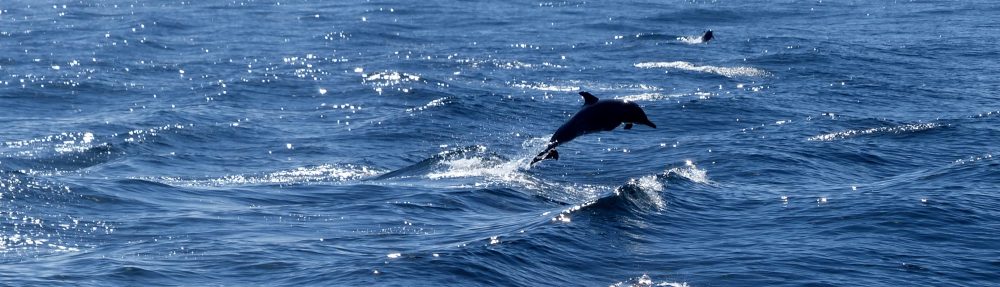
Genome British Columbia :: Salmon health: past, present and future.
Genome British Columbia, the Pacific Salmon Foundation and Fisheries and Oceans Canada are embarking on a remarkable partnership to discover the microbes present in salmon in BC that may be undermining the productivity of BC’s Pacific salmon. The project will conduct epidemiological assessments to explore the transmission dynamics and historical presence of detected microbes, with key focus on microbes that are suspected globally to be causing disease in salmon. Researchers will apply genomic technology to identify and verify which microbes are presently carried by BC’s wild and cultured fish.
The project is being managed in four sequential Phases with Phase 1 valued at $930,000. The first phase is taking place over 12 months, concluding mid-2013, and comprises the collection phase of both cultured and wild salmon. While later phases are subject to final funding, Phase 2 involves rigorous analysis of the tissue samples collected in Phase 1 and in previous research. Using molecular and genomic tools, the research team will attempt to determine when and where microbes may have been transmitted. The research results will begin to rank microbes by their potential to cause disease in BC salmon based on relationships with microbes associated with disease in other parts of the world and histological evidence from salmon in BC. Phase 3 will focus in on the microbes identified in Phase 2, with an emphasis on microbes that have not been extensively researched and that are thought to be of pathological significance in salmon. Phase 4 will include reporting of research and presentations to management agencies on the potential utility of methods developed and the application of outcomes to future monitoring.
"These transitional fossils were not associated with drying ponds or deserts, but consistently were found with humid woodland soils," he said. "Remains of drying ponds and desert soils also are known and are littered with fossil fish, but none of our distant ancestors. Judging from where their fossils were found, transitional forms between fish and amphibians lived in wooded floodplains. Our distant ancestors were not so much foolhardy, as opportunistic, taking advantage of floodplains and lakes choked with roots and logs for the first time in geological history."
Limbs proved handy for negotiating woody obstacles, and flexible necks allowed for feeding in shallow water, Retallack said. By this new woodland hypothesis, the limbs and necks, which distinguish salamanders from fish, did not arise from reckless adventure in deserts, but rather were nurtured by a newly evolved habitat of humid, wooded floodplains.
The findings, he said, dampen both the desert hypothesis of Romer and a newer inter-tidal theory put forth by Grzegorz Niedbwiedzki and colleagues at the University of Warsaw. In 2010, they published their discovery of eight-foot-long, 395-million-year-old tetrapods in ancient lagoonal mud in southeastern Poland, where Retallack also has been studying fossil soils with Polish colleague Marek Narkeiwicz.
This evolutionary pathway can be imagined when you consider floodplains such as Tonle Sap, where during the monsoon the river reverses flow and the fish breed and thrive among a submerged forest.
The International Cooperation to Sequence the Atlantic Salmon Genome (ICSASG, the "Cooperation") has awarded the Phase II contract for next-generation sequencing and analysis of the Atlantic salmon genome to the J. Craig Venter Institute (JCVI) in Rockville, Maryland. The JCVI will be sequencing the salmon genome using next-generation technologies, including assembly to integrate Sanger and next-generation sequence, and comparative genomics. This effort is expected to generate a high-quality resource for those responsible for the management of wild salmon stocks and the salmon aquaculture industry, as well as providing a reference genome for work with other salmonids.
 Great to see the Venter Institute involved in this next stage of genomic resource development for salmon. This will work feed environmental genomics, aquaculture, and our understanding of the role of gene duplication in evolution. Exciting!
Tony Farrell schools us on the perils of simplification and media in public debates over scientific questions. The mysteries of the Fraser River Sockeye, and more broadly the health of pacific salmon, are as heated as they are cryptic, and you need to spend just a little time with scientists in the field to learn that we don't know what the hell is going on with salmon, particularly in the open ocean. Dr. Farrell:
Scientists routinely agree to disagree, but that doesn't sit well with society-at-large, which increasingly demands instant answers and quick solutions.
Nowhere is this more painfully apparent than in the debate and confusion around the future of salmon in British Columbia, which is the current topic of an expensive federal inquiry, the Cohen Commission.
The problem is that we expect too much, too soon from science. The announcement of an "overnight" discovery is always backed by an awful lot of scientific discovery and testing.
While responsible scientists couch their discoveries with words like could, may and might, prudent caution too often gets lost in translation.
Seaside’s dark and kitschy Aquarium never fails to please.  From feeding the clapping seals to the tired anemones in the touch tank, it’s small and friendly and accessible. Kids love it. So do I.
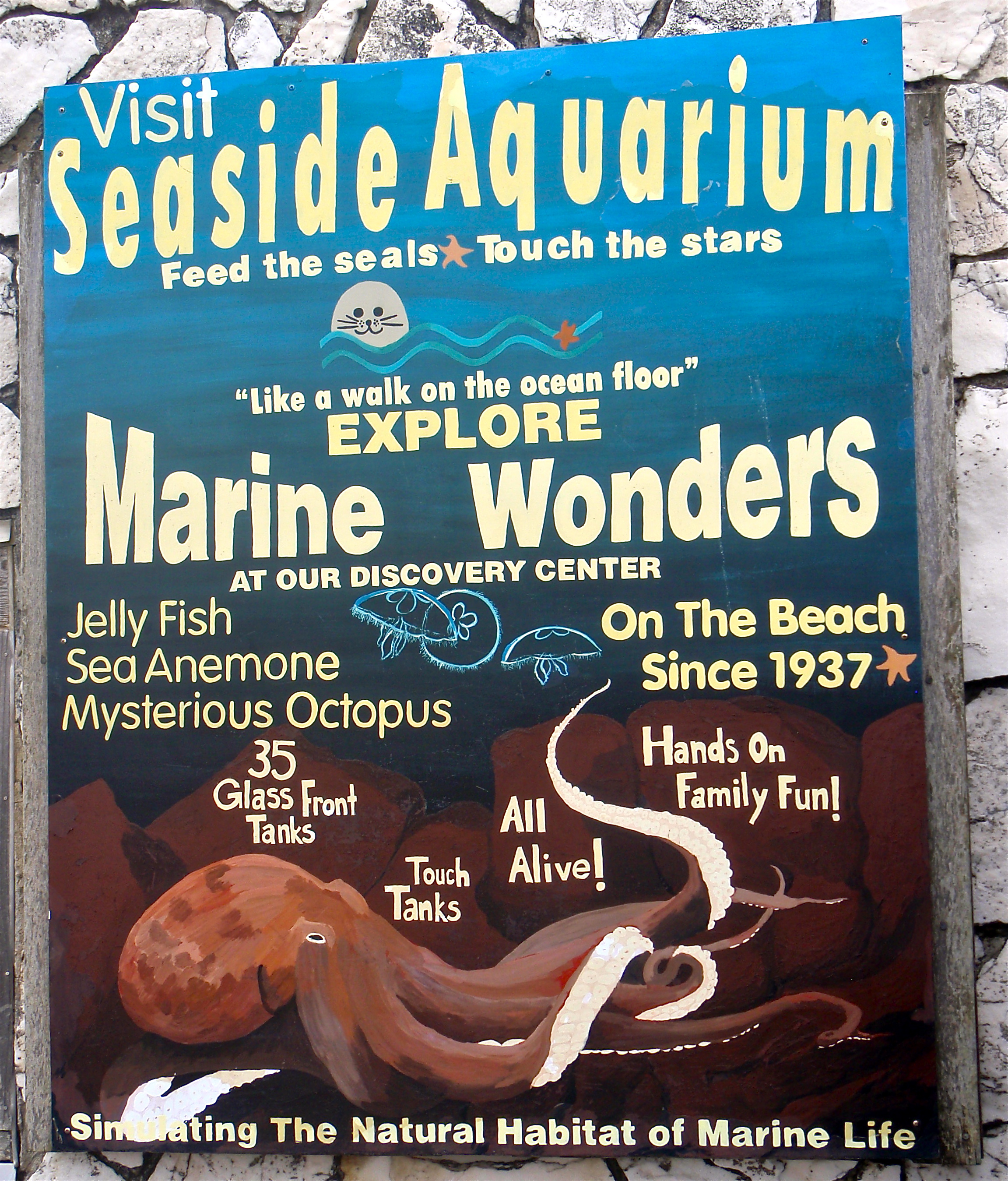
yep, just “like a walk on the ocean floor”
 taken at the Vancouver Aquarium on Christmas Eve
 iBiome