The Extended Phenotype and the Mountain Pine Beetle

For kicks last week I was reading an anti-evolution blog post  (cause that’s how I roll) that included the notion, and I paraphrase, "why does all this matter, it’s all in the past, let’s move on".  ExtendedphenotypeNow, the person making that statement was a non-scientist, and there is no shortage of similar nonsense out in the internets by people undisciplined by facts, so why do I note this now?  Because coincidently I attended a workshop on forestry genomics where one of the presenters put up the cover of the Extended Phenotype, citing the concept of the gene as the unit of selection, in contrast to the organism, as a way to inform analysis of genomics approaches to the Mountain Pine Beetle disaster here in BC.  Having just completed it, mention of the book caught my attention.  He went on to say that, from a gene’s perspective,the Pine Beetle is an insect-fungal hybrid, and the complexity of interactions among these genomes and the genome of the host tree as they adapt to each other is key to combating the blight.  In other words, a conceptual model based on standard Darwinian theory informs scientific inquiry into a current problem. 

This is why good theories (in this case Darwin’s natural selection and Dawkin’s Selfish Gene) persist – they are useful.  They generate testable hypotheses and inform research every single day.  Unlike intelligent design theory, which is utterly useless in shedding light on any given set of observations. 
Dengue Mosquito genome sequenced

Link: CBC: Genetic map of deadly mosquito revealed:

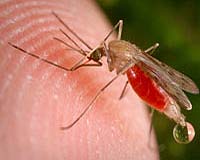
A complete map of the Aedes aegypti‘s DNA was published Thursday, just the second time scientists have sequenced the genome of a mosquito. A genetic sequence of Anopheles gambiae, the mosquito that carries malaria, was published in 2002.

Writing in the journal Science, the international team of scientists said the Aedes aegypti
genome is five times longer than that of its malaria-carrying relative
and carries unique proteins and genes that make it hardier than most
insects.

The breakthrough is the first step in a long process scientists hope
will lead to insecticides more capable of dealing with the insects or
genetically engineered versions of the insects that would be resistant
to the viruses that transmit the diseases….

Aedes aegypti is known to carry yellow fever and dengue fever.
Yellow fever kills about 30,000 people a year and is common in West and
Central Africa and parts of South America. Dengue fever kills about
25,000 people annually and occurs in about 100 countries…


Guelph opens first centre for DNA barcoding

Img_6775

Links: CTV.ca and The Barcode of Life

A Canadian institute working to compile a database of DNA barcodes for every species on earth officially opened on Wednesday.
The $4.2 million The Biodiversity Institute of Ontario, at Guelph University, is the fist of its kind in the world.
The barcode technology identifies species by analyzing short regions of their DNA instead of the whole genome.
"We are the world’s first barcode factory," said Dr. Paul Hebert, director of the institute and the first scientist to propose DNA barcoding.
This process, which uses a short DNA sequence on a common gene to differentiate between multi-cellular living things, makes it possible to identify species much quicker than before.
The barcoding technique has already led to the discovery of new bird, butterfly and fish species.
"Less than one-millionth of all the DNA is enough for us to tell what species an organism belongs to," Hebert explained.
With old technology, the institute would have been able to identify about 1,000 species a year.
Once the institute is completely up and running, it could categorize up to 500,000 samples annually.
Hebert said that this technique could allow scientists to identify an estimated 10 million species in the next 20 years. Only 1.2 million have been formally categorized in the past 250 years.
Once a species is identified, its barcode is uploaded to Barcode of Life Data Systems, an online database, where it can be accessed by other scientists.
Researchers can enter a DNA barcode on the site. If there’s match, the database can provide the corresponding species.
The institute has already described almost 28,000 species with barcodes, and they’re getting tissue samples from around the world sent to them for quick analysis.
Hebert said he’d ultimately like to see DNA barcoding put to practical use for things like pest management, food safety and environmental monitoring.

DNA variant puts Caucasians at higher risk for heart disease

What’s interesting to me about this find is the linkage, as described below, between this region of the genome and 2 major disease groups.  Pure speculation but this region perhaps is linked to a nutritional function that was beneficial in times of scarcity and lethal now in a world of plenty, as both CVD and diabetes are associated with food abuse.   Link: globeandmail.com:

Two massive and independent studies have discovered a significant
new risk factor for heart disease — a menacing hunk of DNA that half of
all Caucasians carry.

Researchers found the heart risk linked to this genetic trait held
up regardless of whether other well-known signs of susceptibility, such
as high blood pressure, smoking or high cholesterol, are present.

As a result, the finding raises the prospect of a genetic test to
help identify people at high risk of heart disease and measures to
prevent it. It could also lead to a better understanding of the biology
behind the world’s No. 1 killer, since no one yet knows how this
genomic quirk works….

Based on research involving 23,000 people in Canada, the United
States and Denmark, scientists found that 50 per cent of Caucasians
carried one copy of an altered stretch of chromosome 9, and as a
result, their risk of developing heart disease rose by 15 to 20 per
cent. A quarter of Caucasians carried two copies and faced an increased
risk of as much as 40 per cent….

…Meanwhile, in a coincidence that has even top geneticists surprised
at the odds, three different groups reported last week that this same
region of chromosome 9 could also raise the risk of Type 2 diabetes.

Francis Collins, director of the U.S. National Human Genome Research
Institute and one of the diabetes investigators, said: "I think this is
a stunner. This is like the seat of the soul of the genome. It seems
like this one place carries all of that weight for two very common and
very dangerous diseases.

"I never would have guessed that we would end up coalescing, zeroing
in on the same 50,000 base pairs out of three billion [chemical units
that make up DNA]…"

a rare and expensive tome

Capturedata78

A colleague and I were searching for a copy of Evolution by Gene Duplication by Susumu Ohno, in part to insert some knowledge on the subject into my thick head, and Sweet Fancy Moses! it’s expensive. More than 2 Gs for a copy in good condition.  Given that it’s still the text on the subject I was shocked at how hard it is to come by.  Not even any e-versions I could find on Google.

There are copies (currently out) in the SFU and UBC libraries.  Any other options?

Monkey Business

Again, from GenomeWeb, sequence of the rhesus monkey (Macaca mulatta) : Newly Sequenced Macaque Genome May Hint at Human Mental Disorders.

Researchers have sequenced the genome of the rhesus macaque, the third primate genome to be sequenced, the American Association for the Advancement of Science said today.
In findings detailed in a special issue of the Science dedicated to the macaque project, researchers said the rhesus macaque, also known as Macaca mulatta, is 97.5-percent similar to humans.
That makes it valuable both for its proximity to humans – for which researchers found a link to a mental disorder – and for its relative distance with the chimpanzee, which shares 99 percent of its genes with humans….

The sequence was generated in collaboration with the Michael Smith Genome Science Centre here in Vancouver.  The project site at Baylor is here, along with some of the other sequencing projects underway.  More information below the fold…

Continue reading

VC Spending in ‘Omics Field Swelled Five-Fold in Q4 ’06; Bionformatics Investment Declined

Encouraging news in genomics investments, and perhaps a bit of the shine has come off bioinformatics? While the field of bioinformatics is increasingly becoming the essential core of molecular biology, the business model is still at the blastula stage: From GenomeWeb:

Venture capital investment in the genomics, bioinformatics, and proteomics segments increased five-fold during the fourth quarter of 2006 over the same period in 2005, according to a GenomeWeb Daily News roundup of companies that disclosed receiving investments.
Venture capitalists invested around $140 million in genome tool and technology companies in the final quarter of 2006, nearly 5 times the $31.6 million they invested in the same period of 2005.
Private-equity investors flocked to genomics businesses, while venture funding among bioinformatics companies dipped slightly.
Investors spent $70 million on companies with core businesses in genomics during the fourth quarter of 2006, almost 5 times more than the $15.2 million they spent year over year.
Venture funding for businesses focused on bioinformatics over the period declined 4.4 percent to $13 million from $13.6 million in the same quarter in 2005.

Of Tall Dogs & Small Dogs

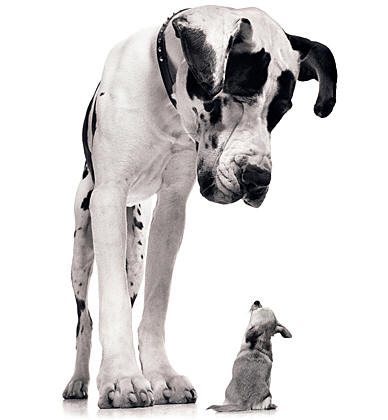
Big_dog_little_dogResearchers at the National Human Genome Research Institute have located genes responsible for small size in dogs.  Humans have been modifying dogs for millennia through selective breeding for an array of traits, including the ability to crawl in small holes searching for vermin.  The researchers claim this will illuminate human disease linked to mutations affecting growth.  From  ENN:


So he began the Georgie project, studying the genes of the Portuguese
water dog, a breed that comes in a wide range of sizes from 25 pounds
to 75 pounds.

Ostrander and colleagues then extended that to a range of large
and small breeds and the researchers located a section of DNA that
varied between large and small breeds in most cases.

Known as a regulatory sequence, the difference is on dog
chromosome 15 next to a previously known gene named IGF1, for
insulin-like growth factor 1. The hormone controlled by the IGF1 gene
helps mammals — including people — grow from birth to adolescence.


In small dog breeds a mutation in the sequence next to the gene kept them from growing larger, the researchers said…

…Overall, 21 researchers studied 3,241 dogs from 143 breeds,
ranging from bichon frise, Chihuahua, Maltese, Pomeranian, toy poodle,
pug and Pekingese to Saint Bernard, Newfoundland, mastiff, Great Dane,
Irish wolfhound and standard poodle.

Dogs are descended from wolves, having been domesticated 12,000
to 15,000 years ago. Selective breeding has produced the many different
types of dogs that exist today.


Judging from ancient artwork, small breeds were developed quite early, Lark said.

A study of several hundred modern wolves didn’t find any with
the small-dog marker, he said, but it is possible there were small
wolves in ancient times.

"If you’re a primitive man you would adopt the small wolf, not
the big one," he said. And for a small wolf, life would have been
easier hanging around people looking for scraps than competing with
larger wolves in the wild.

I think we can assume this will lead to new and exciting breeds as well, like the Great Dachshund or Miniature Irish Wolfhound.

Transgenic Mosquito Resistant to Malaria

Malariamosquitobg
From Seed, scientists at John Hopkins have bred mosquitos that are resistant to malaria, and therefore unable to infect humans with the parasite. I haven’t read the original PNAS paper yet but I wonder what potential there is for the parasite to mutate around the resistance in the medium to long term i.e. how long before we return to square one.  Further into the article I hit the big qualifier:

The study suggested that when feeding on malaria-infected blood,
"transgenic malaria-resistant mosquitoes have a selective advantage
over non-transgenic mosquitoes," the authors wrote.

The lab-altered mosquitoes competed equally well with natural
insects when fed non-infected blood but did not outbreed their natural
counterparts in that case, according to the study.

For the strategy against malaria to be effective, transgenic
mosquitoes would have to outbreed the natural insects when feeding off
untainted blood.

Further research was still needed before the altered insects could
be released into the wild, as only a small percentage of mosquitoes in
nature are exposed to malaria, the authors wrote.

Still, the research carried "important implications for
implementation of malaria control by means of genetic modification of
mosquitoes," the authors wrote.

I am also curious what the regulatory process would be for releasing a transgenic insect into the wild.  I Guess it depends on where it is released.  For some countries it would be "Badges? We don’t need no stinking badges"

$100 million for genomics

Today’s federal budget provides for $100 million investment this year in genomics and proteomics.  From the  Genome Canada website:

Budget 2007 provides Genome Canada with an additional $100 million in 2006–07 to sustain funding for the regional genome centres and related technology platforms, extend promising research projects and support Canada’s participation in strategic international research collaborations.

The government’s committments to the R&D economy are described here.