Liability for Failure to Vaccinate

Art Caplan:

"I think there should be a right to decide not to vaccinate your child.  But, we have been far too lenient in putting up with the consequences of that lousy choice.  If your kid gets the measles, and remember public health officials are getting very very good at tracing outbreaks to their source, and makes my kid sick (can happen since vaccine is not 100% effective), my newborn baby die (newborns can’t benefit from vaccines) or my wife miscarry (fetuses are at especially high risk), then shouldn’t I be able to sue you for the harm you have done?

Some will say that the law in NY and other states allows refusal and that protects against liability.  Maybe.

If you know the dangers of measles or for that matter whooping cough or mumps, and you still choose to put others at risk should you be exempt from the consequences of that choice?  I can choose to drink but if I run you over it is my responsibility.  I can choose not to shovel the snow from my walk but if you fall I pay.  Why should failing to vaccinate your children or yourself be any different?"

via blogs.law.harvard.edu

Five Predictions For Biotech And Medicine In 2012 – Forbes

2. New genetic technologies will brave the valley of death. DNA sequencing is getting cheaper and making its way into hospitals. Some cancer patients (notably Christopher Hitchens and Steve Jobs) have used genetic tests to try and pick the right drugs for their tumors. But right now using DNA sequencing on patients is not making much money for companies that make DNA sequencers, such as market leader Illumina, and big funders like the National Institutes of Health are tightening their belts. The result is that the two publicly traded genomics upstarts, Pacific Biosciences of California and Complete Genomics, are trading below or near the value of the cash they have on hand.

The beneficiary so far has been Ion Torrent, the new sequencer maker bought by lab giant Life Technologies in 2010. It has been able to build a user base with its sequencing technology, an it could use this bulwark to launch a bigger attack on Illumina. The science will continue to advance. Whether its these DNA sequencer companies or next generation efforts like Foundation Medicine, the Google Ventures-backed cancer sequencing startup, is anybody’s guess.

via www.forbes.com

Reality check

via Sullivan, nothing like actual data to bust a myth.  As Seth Godin states, fear of the unknown overrides common perceptions of workaday risk:

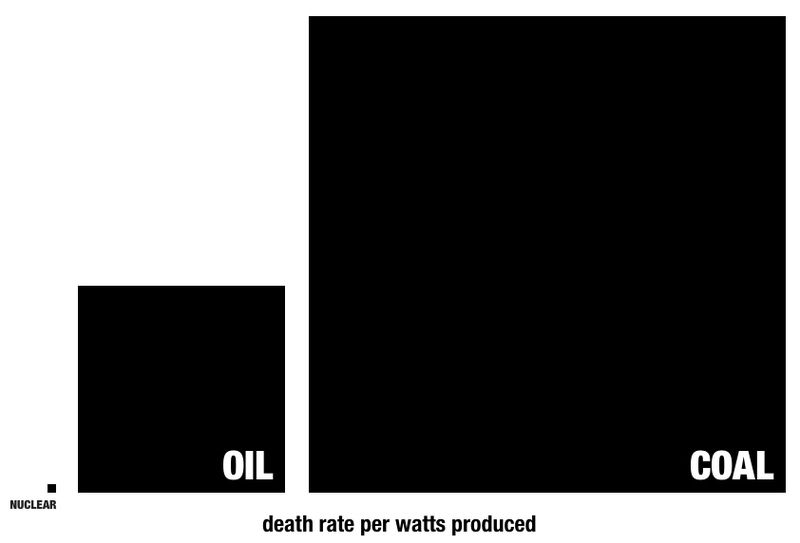
Nuclear coal oil
For every person killed by nuclear power generation, 4,000 die due to coal, adjusted for the same amount of power produced… You might very well have excellent reasons to argue for one form over another. Not the point of this post. The question is: did you know about this chart? How does it resonate with you?

Vivid is not the same as true. It's far easier to amplify sudden and horrible outcomes than it is to talk about the slow, grinding reality of day to day strife. That's just human nature. Not included in this chart are deaths due to global political instability involving oil fields, deaths from coastal flooding and deaths due to environmental impacts yet unmeasured, all of which skew it even more if you think about it.

This chart unsettles a lot of people, because there must be something wrong with it. Further proof of how easy it is to fear the unknown and accept what we've got.

via sethgodin.typepad.com

Christopher Hitchens is very ill

Adding gloom to a drizzled day, it appears Christopher Hitchens' cancer is very much worse than I had hoped. I've only just begun his autobiography and passed over the death of his father from the very same cancer. I'm finding it difficult to anticipate the loss of such a gifted thinker and writer.

In one way, I suppose, I have been “in denial” for some time, knowingly burning the candle at both ends and finding that it often gives a lovely light. But for precisely that reason, I can’t see myself smiting my brow with shock or hear myself whining about how it’s all so unfair: I have been taunting the Reaper into taking a free scythe in my direction and have now succumbed to something so predictable and banal that it bores even me. Rage would be beside the point for the same reason. Instead, I am badly oppressed by a gnawing sense of waste. I had real plans for my next decade and felt I’d worked hard enough to earn it. Will I really not live to see my children married? To watch the World Trade Center rise again? To read—if not indeed write—the obituaries of elderly villains like Henry Kissinger and Joseph Ratzinger? But I understand this sort of non-thinking for what it is: sentimentality and self-pity. Of course my book hit the best-seller list on the day that I received the grimmest of news bulletins, and for that matter the last flight I took as a healthy-feeling person (to a fine, big audience at the Chicago Book Fair) was the one that made me a million-miler on United Airlines, with a lifetime of free upgrades to look forward to. But irony is my business and I just can’t see any ironies here: would it be less poignant to get cancer on the day that my memoirs were remaindered as a box-office turkey, or that I was bounced from a coach-class flight and left on the tarmac? To the dumb question “Why me?” the cosmos barely bothers to return the reply: Why not?

via www.vanityfair.com

SPIEGEL Interview with Craig Venter: ‘We Have Learned Nothing from the Genome’

Via Pharyngula, a great interview with Craig Venter in Der Spiegel. I love his point about the limited value so far of the human genome to medicine. So far. It's yielded an immense amount for science and our understanding of evolution and human origins, biological diversity, etc. but still not a lot of clinical application.Also, I can highly recommend Venter's biography.  The guy's a visionary.

SPIEGEL: So the Human Genome Project has had very little medical benefits so far?

Venter: Close to zero to put it precisely.

SPIEGEL: Did it at least provide us with some new knowledge?

Venter: It certainly has. Eleven years ago, we didn't even know how many genes humans have. Many estimated that number at 100,000, and some went as high as 300,000. We made a lot of enemies when we claimed that there appeared to be considerably fewer — probably closer to the neighborhood of 40,000! And then we found out that there are only half as many. I was just in Stockholm for the 200th anniversary of the Karolinska Institute. The first presentation was about the many achievements the decoding of the genome has brought. Then I spoke and said that this century will be remembered for how little, and not how much, happened in this field.

SPIEGEL: Why is it taking so long for the results of genome research to be applied in medicine?

Venter: Because we have, in truth, learned nothing from the genome other than probabilities. How does a 1 or 3 percent increased risk for something translate into the clinic? It is useless information.

via www.spiegel.de

Update: Larry Moran left a comment pointing out that most informed scientists expected the human genome to contain 30,000 or fewer genes, and points to this post on his site: Facts and Myths Concerning the Historical Estimates of the Number of Genes in the Human Genome.  I also like this passage about the perceptions of our own complexity:

The second point will have to be put off for another time but it’s important enough to mention here. Ast thinks that humans need to make many times more proteins than worms and corn because we are so much more complex. There are two problems with such a point of view—are we, in fact, 2-3 times more complex than corn? And, does it take thousands of new proteins to generate the structures that make us unique?

I think some people exaggerate our complexity and the place of humans relative to other species. This incorrect perspective can cause some scientists to put their faith in weakly supported hypotheses that claim to explain why humans really are complex and important in spite of the fact that we don’t have a lot of genes.

David Frum is reasonable

Frum takes on the wingnut habit of throwing the 'fascist' label at liberals in the context of the US health care debate. He nails it here:

Can We Get a Grip?.

Contra Rush Limbaugh, history’s actual fascists were not primarily known for their anti-smoking policies or generous social welfare programs. Fascism celebrated violence, anti-rationalism and hysterical devotion to an authoritarian leader. To date, the Obama administration has fallen rather short in these departments. Perhaps uncomfortably aware of the shortcoming, the hardliners have developed — okay, invented really — their own mythology about Obama “brownshirts.” (The popular conservative website RedState.org literally uses the term.) The complaint rests on a single case — that of conservative activist Kenneth Gladney, who got into a scuffle at a townhall in St. Louis, Missouri. The altercation was captured on video and you can watch it on YouTube. What you’ll see is a man, already on the ground, and another man stepping back in order to avoid tripping over him. The man on the ground is Gladney. Gladney walked away from the confrontation and later went to hospital, where he was treated for light injuries and released the same day. Whatever happened and whoever started it, this happily bloodless encounter bears not even the most glancing resemblance to the brutality that made Hitler’s brownshirts notorious. And yet, look up Gladney’s name online and he’s suddenly a poignant martyr.
Can we get a grip here? It is possible to express opposition to a president’s policies without preposterous name-calling — without diminishing and disparaging the unique experiences of those who did actually suffer from actual persecution by actual Nazis. After all, you know who else trafficked in hysterical exaggeration? That’s right: Hitler!

David Cameron joins the fray

UK Conservative Leader responds to US wingnut attacks on the National Health Service:

We are proud of the NHS.

Millions of people are grateful for the care they have received from the NHS – including my own family. One of the wonderful things about living in this country is that the moment you're injured or fall ill – no matter who you are, where you are from, or how much money you've got – you know that the NHS will look after you.

Balloon Juice » A Brief History of Fail

John Cole caught this little gem in Investors Business Daily

People such as scientist Stephen Hawking wouldn’t have a chance in the U.K., where the National Health Service would say the life of this brilliant man, because of his physical handicaps, is essentially worthless.

The wingnut attack on universal health care always always relies on lurid, false, horror stories about health care in Canada, UK, and other western nations.  So bloody dim and sloppy they don't even bother with anything resembling a fact check.

Update:  Stephen Hawking responds:

"I wouldn't be here today if it were not for the NHS," he told us. "I
have received a large amount of high-quality treatment without which I
would not have survived." Something here is worthless. And it's not him.

US teen pregnancy and syphilis rates rose sharply during George Bush’s presidency, Centres for Disease Control finds

well i certainly didn't see this one coming (via John Cole):

Teenage pregnancies and syphilis have risen sharply among a generation of American school girls who were urged to avoid sex before marriage under George Bush's evangelically-driven education policy, according to a new report by the US's major public health body.


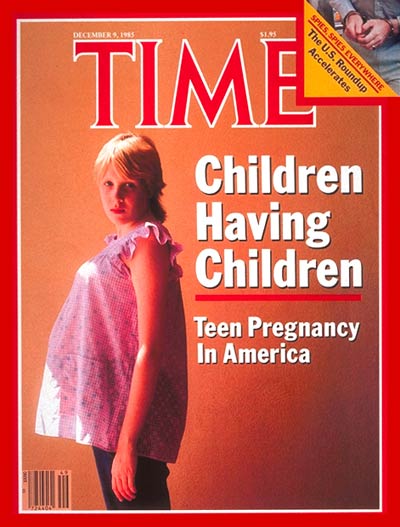
Pregnant teen In a report that will surprise few of Bush's critics on the issue, the Centres for Disease Control says years of falling rates of teenage pregnancies and sexually transmitted disease infections under previous administrations were reversed or stalled in the Bush years. According to the CDC, birth rates among teenagers aged 15 or older had been in decline since 1991 but are up sharply in more than half of American states since 2005. The study also revealed that the number of teenage females with syphilis has risen by nearly half after a significant decrease while a two-decade fall in the gonorrhea infection rate is being reversed. The number of Aids cases in adolescent boys has nearly doubled.


The CDC says that southern states, where there is often the greatest emphasis on abstinence and religion, tend to have the highest rates of teenage pregnancy and STDs.