Deepest Ever Hubble View: “History of the Universe in a Single Image”

the view from our pale blue dot…breathtaking
Hubble eXtreme Deep Field (XDF)
Source: Hubblesite.org

Because of the time it takes for light in the distant universe to reach Earth, when we look at, for example, a star a billion light-years away, we’re actually seeing what a portion of the cosmos looked like a billion years ago.

So, by combining pictures of various reaches of a small patch of sky, Hubble’s new eXtreme Deep Field (XDF) image, released Tuesday, essentially flattens time. Primitive, 13-billion-year-old galaxies—born just 450 million years after the big bang—seem to float side-by-side with closer, more advanced galaxies.

As “the deepest image of the sky ever obtained,” the XDF picture “reveals the faintest and most distant galaxies ever seen,” Hubble astronomer Garth Illingworth, of the University of California, Santa Cruz, said in a statement.

And some of the prettiest. “It’s beautiful,” said Geza Gyuk, director of astronomy at Chicago’s Adler Planetarium. “The level of detail is amazing, and being able to look that far back in time is incredible. You can begin to really see the vast majority of the history of the universe in a single image.”
via news.nationalgeographic.com

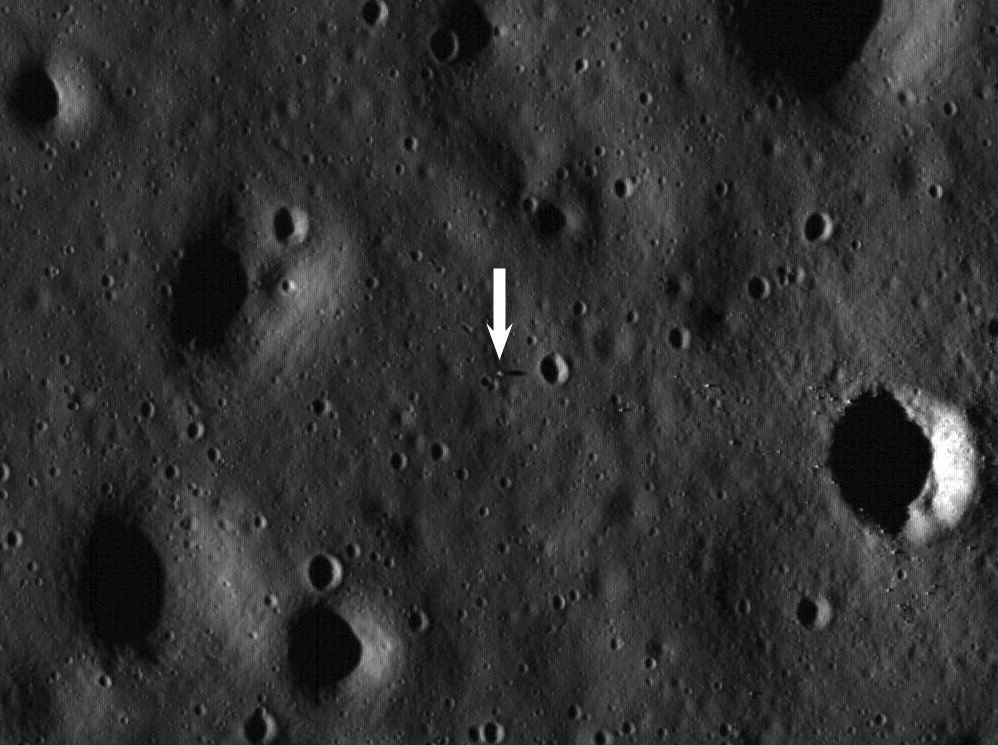
Apollo 11 lander spotted by lunar satellite

Images of the The Eagle – the Apollo 11 lander, just in time for the 40th anniversary of Neil Armstrong's giant leap.

Apollo11 lander

From the Scientific American Gallery.

NASA's Lunar Reconnaissance Orbiter (LRO), which reached orbit around the moon last month, passed over the Sea of Tranquility on Sunday and spied the Apollo 11 lunar module, still resting on the surface.

The lander set down on the moon by Buzz Aldrin and Neil Armstrong in 1969 is at the center of this image, a small white dot [arrow] with a long shadow stretching to the right. Each pixel in the photograph, which comes from the LRO's Narrow Angle Camera, is 1.14 meters across, so the Apollo 11 craft is just a few pixels wide.

dodged a bullet

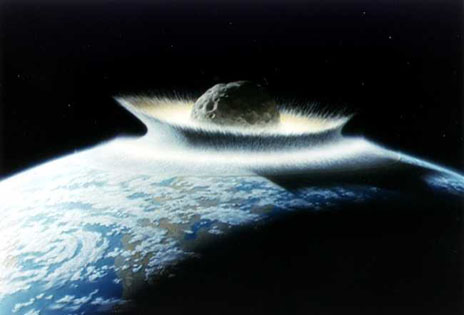
This was really close.  Less than a rounding error from an astronomical perspective.  It strikes me that the current state of our technology and resources will allow us to spot these things coming at us before we have developed the wherewithal to do anything about it.  I'll put aside the grim notion of helplessly watching the end approach to suggest pouring some of the stimulus money into avoiding armageddon.  Guns in the sky anyone? Space tractors?Asteroid-impact-on-Earth

The News Serving Pictou County Nova Scotia:  Phew! Asteroid’s passing by Earth on Monday was a cosmic close call:

An asteroid about the size of one that blasted Siberia a century ago just buzzed by Earth.

NASA’s Jet Propulsion Laboratory reported that the asteroid zoomed past Monday morning.


The asteroid named 2009 DD45 was about 78,000 kilometres from Earth.


That is just twice the height of some telecommunications satellites and about a fifth of the distance to the Moon.


The space ball measured between 21 metres and 47 metres in diameter.


The Planetary Society said that made it the same size as an asteroid
that exploded over Siberia in 1908 and levelled more than 2,000 square
kilometres of forest.


Most people probably didn’t notice the cosmic close call.


The asteroid was only spotted two days ago and at its closest point passed over the Pacific Ocean near Tahiti.