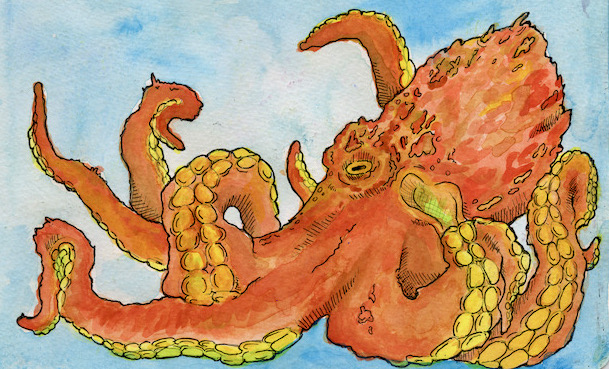
Another wonderful work by the offspring.

Another wonderful work by the offspring.
I encourage everyone to see this beautiful documentary, My Octopus Teacher. It follows a South African photographer, Craig Foster, as he copes with depression by free diving the local coast and forming a bond with a an unexpectedly charismatic common octopus (Octopus vulgaris). He visits daily for nearly a year, filming her nesting and playing, hunting and being hunted, gaining her trust and contact. The visuals are beautiful – the South African kelp forests could as easily pass for my own Pacific coast.
An octopus is clever – curious and playful (the scene of her playing with fish brought tears to my eyes). It fascinates me how this intelligence grew on a limb distinct and separate from us and our mammal cousins. Where we share kinship with the chimpanzee and dolphin, the octopus in her phylum is kith and kin with with snails, clams, and sea slugs.
I didn’t know what to expect when I started watching. What I got was a captivating dive into a life alien and wonderful.
Promising findings from genomic analysis of corals:
Corals face four major threats from humans: Destruction of reefs by grenades and poison used to kill fish for food; nutrient pollution, usually from sewage or agricultural runoff, that overstimulates harmful algae; increased heat in the upper ocean, which causes most coral bleaching that can kill reefs; and acidification of the ocean, according to Falkowski.”Corals are the most diverse marine ecosystems on the planet,” he said. “But their value to marine ecosystems — and to our own use of marine resources — is very underappreciated.”
Perhaps the extreme diversity of coral systems help along an adaptive response to climate change:
Bhattacharya and coauthors found dozens of genes that allow corals to coordinate their response to changes in temperature, light and pH (acidity vs. alkalinity) and deal with stress triggered by the algae that live with them and exposure to high levels of light.
Surprisingly, some of these stress-related genes are of bacterial origin and were acquired to help corals survive. An intriguing theory that arose from the study is that the vast genetic repertoire of corals may help them adapt to changing ocean conditions.
Source: Scientists Create World’s Largest Coral Gene Database
Unless immediate action is taken, the famous coral reef system will be unable to recover from the "irreversible" damage that climate change will wreak on it by 2030, a new report out of Australia warns.
Published by the World Wildlife Fund-Australia, the University of Queensland report paints a bleak picture for the future of the ecosystem.
"If we don't increase our commitment to solve the burgeoning stress from local and global sources, the reef will disappear," the report, prepared for Earth Hour's upcoming annual event, states. "This is not a hunch or alarmist rhetoric by green activists. It is the conclusion of the world's most qualified coral reef experts."
This is the best time of year to be underwater in B.C. As more light reaches into depths free of phytoplankton and bull kelp, visibility is incredibly clear. Just a few feet beneath the surface, water temperature doesn't change much from summer to winter, so with proper diving gear there's nothing to worry about.
Diving in winter here is fantastic, just a little clunky in a 6 ml wetsuit. And my blood has thinned I think and my diving tends to happen only when in the tropics these days.
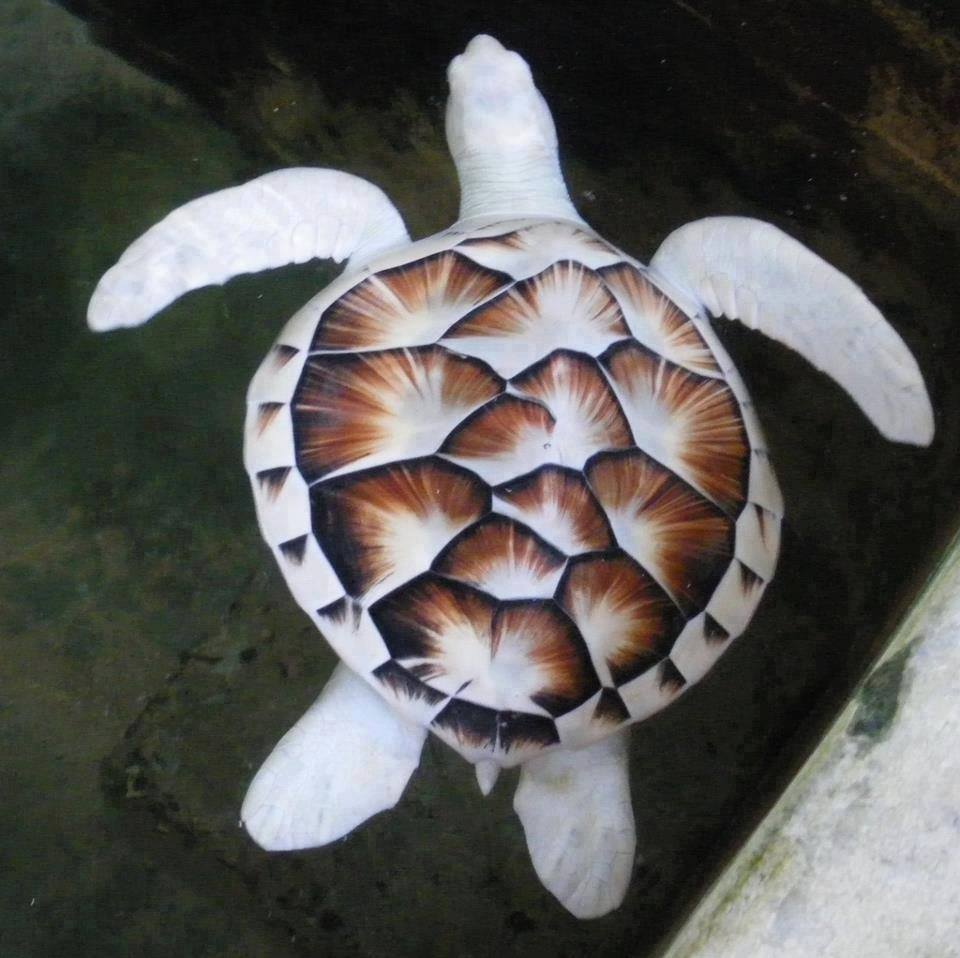
a rare albino sea turtle, in a Sri Lankan sanctuary. easily spotted by predators, they typically don't last long in the wild
Seaside’s dark and kitschy Aquarium never fails to please.  From feeding the clapping seals to the tired anemones in the touch tank, it’s small and friendly and accessible. Kids love it. So do I.
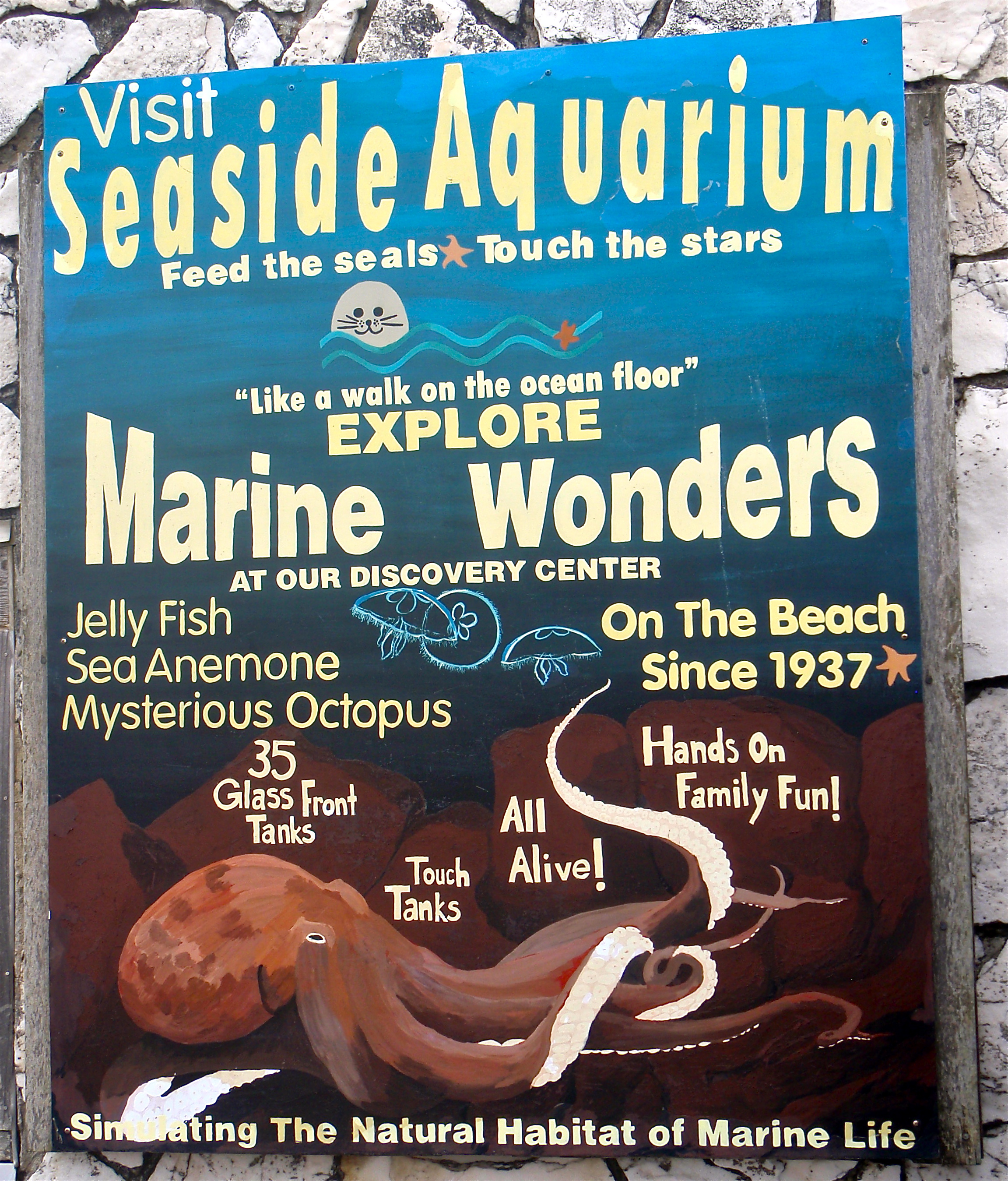
yep, just “like a walk on the ocean floor”
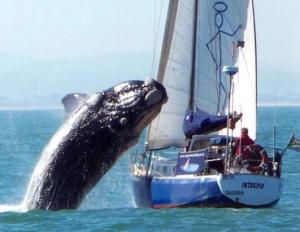
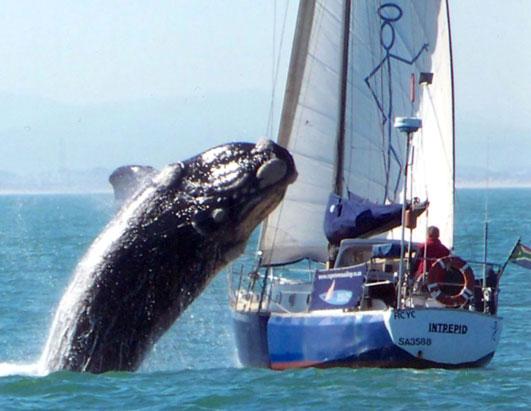
Paloma Werner said Wednesday the whale breached just feet (meters) from their boat in Cape Town's waters on Sunday. It whacked the yacht, snapping the mast in two. A local newspaper showed a photo, captured by a passenger on a nearby boat, of a massive black whale towering over the yacht. Werner says neither she nor her companion were hurt, and she saw the whale swimming around minutes after the collision.
Freediving is the ultimate sport. Pushing physical limits into an acutely dangerous environment. This video of a freediving “base jumper” into a blue hole is….breathtaking.
With Ocean's Day freshly past, a great lecture and beautiful, horrible images. National Geographic photographer Brian Skerry shows the war on the ocean through his lens.
 iBiome