About that consensus on global warming: 9136 agree, 1 disagrees.

From Scientific American:

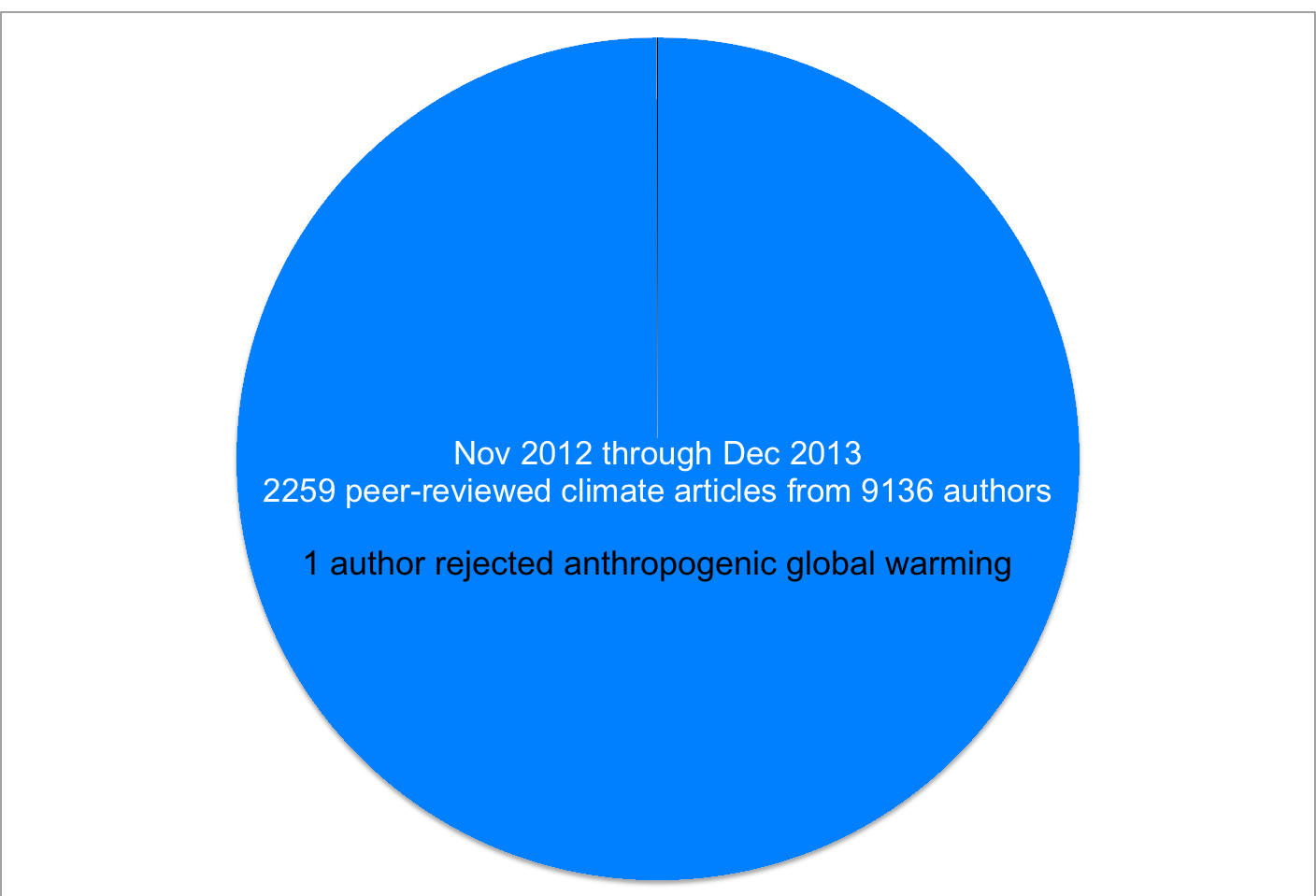
Jan12014piechartIt’s worth noting how many authors agree with the basic fact of global warming – more than nine thousand. And that’s just in a single year. Now I understand as well as anyone else that consensus does not imply truth but I find it odd how there aren’t even a handful of scientists who deny global warming presumably because the global warming mafia threatens to throttle them if they do. It’s not like we are seeing a 70-30% split, or even a 90-10% split. No, the split is more like 99.99-0.01%.

Isn’t it remarkable that among the legions of scientists working around the world, many with tenured positions, secure reputations and largely nothing to lose, not even a hundred out of ten thousand come forward to deny the phenomenon in the scientific literature? Should it be that hard for them to publish papers if the evidence is really good enough? Even detractors of the peer review system would disagree that the system is that broken; after all, studies challenging consensus are quite common in other disciplines. So are contrarian climate scientists around the world so utterly terrified of their colleagues and world opinion that they would not dare to hazard a contrarian explanation at all, especially if it were based on sound science? The belief stretches your imagination to new lengths.

Those who think scientists keep silent on global warming presumably because they fear the barbs of the world demonstrate a peculiar kind of paranoia, especially since what they fear largely does not exist. More prosaically they need to recall Carl Sagan’s words again because the claim that scientist don’t dare to speak out against global warming in the literature is, quite definitely, an extraordinary claim. And it doesn’t seem to stand up to even ordinary evidence.
via blogs.scientificamerican.com

Americans Have Little Faith In Scientists, Science Journalists: Poll

In a new HuffPost/YouGov poll, only 36 percent of Americans reported having "a lot" of trust that information they get from scientists is accurate and reliable. Fifty-one percent said they trust that information only a little, and another 6 percent said they don't trust it at all.

Einstein tongue

Science journalists fared even worse in the poll. Only 12 percent of respondents said they had a lot of trust in journalists to get the facts right in their stories about scientific studies. Fifty-seven percent said they have a little bit of trust, while 26 percent said they don't trust journalists at all to accurately report on scientific studies.

What’s more, many Americans worry that the results of scientific studies are sometimes tainted by political ideology — or by pressure from the studies’ corporate sponsors.

via www.huffingtonpost.com

not encouraging. i've just cracked the War on Science
, reporting on the new low in the relationship between the government and the scientific community.

Elf lobby blocks Iceland road project

this is bloody brilliant

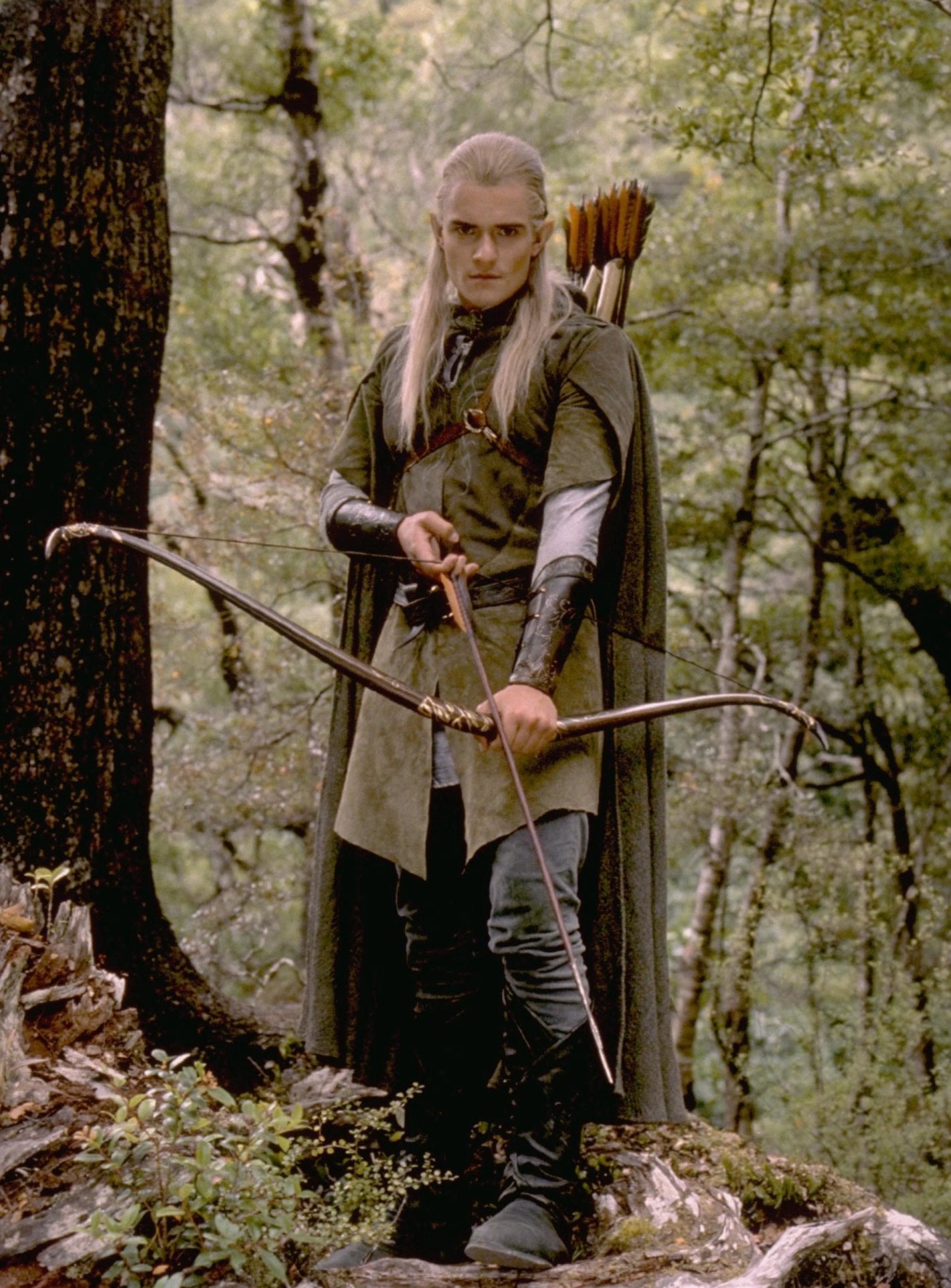
LegolasElf advocates in Iceland have joined forces with environmentalists to urge authorities to abandon a highway project that they claim will disturb elf habitat, including an elf church.

The project has been halted until the supreme court of Iceland rules on a case brought by a group known as Friends of Lava, who cite both the environmental impact and the detrimental effect on elf culture of the road project.

via www.theguardian.com

Liability for Failure to Vaccinate

Art Caplan:

"I think there should be a right to decide not to vaccinate your child.  But, we have been far too lenient in putting up with the consequences of that lousy choice.  If your kid gets the measles, and remember public health officials are getting very very good at tracing outbreaks to their source, and makes my kid sick (can happen since vaccine is not 100% effective), my newborn baby die (newborns can’t benefit from vaccines) or my wife miscarry (fetuses are at especially high risk), then shouldn’t I be able to sue you for the harm you have done?

Some will say that the law in NY and other states allows refusal and that protects against liability.  Maybe.

If you know the dangers of measles or for that matter whooping cough or mumps, and you still choose to put others at risk should you be exempt from the consequences of that choice?  I can choose to drink but if I run you over it is my responsibility.  I can choose not to shovel the snow from my walk but if you fall I pay.  Why should failing to vaccinate your children or yourself be any different?"

via blogs.law.harvard.edu

“Many of our cultural institutions cultivate a Philistine indifference to science”

Stephen Pinker writes about a matter close to my own heart – the apparent and growing distain for science as a way of understanding the world.

Moreover, science has contributed—directly and enormously—to the fulfillment of these values. If one were to list the proudest accomplishments of our species (setting aside the removal of obstacles we set in our own path, such as the abolition of slavery and the defeat of fascism), many would be gifts bestowed by science.

The most obvious is the exhilarating achievement of scientific knowledge itself. We can say much about the history of the universe, the forces that make it tick, the stuff we’re made of, the origin of living things, and the machinery of life, including our own mental life. Better still, this understanding consists not in a mere listing of facts, but in deep and elegant principles, like the insight that life depends on a molecule that carries information, directs metabolism, and replicates itself.

Science has also provided the world with images of sublime beauty: stroboscopically frozen motion, exotic organisms, distant galaxies and outer planets, fluorescing neural circuitry, and a luminous planet Earth rising above the moon’s horizon into the blackness of space. Like great works of art, these are not just pretty pictures but prods to contemplation, which deepen our understanding of what it means to be human and of our place in nature.

And contrary to the widespread canard that technology has created a dystopia of deprivation and violence, every global measure of human flourishing is on the rise. The numbers show that after millennia of near-universal poverty, a steadily growing proportion of humanity is surviving the first year of life, going to school, voting in democracies, living in peace, communicating on cell phones, enjoying small luxuries, and surviving to old age. The Green Revolution in agronomy alone saved a billion people from starvation. And if you want examples of true moral greatness, go to Wikipedia and look up the entries for “smallpox” and “rinderpest” (cattle plague). The definitions are in the past tense, indicating that human ingenuity has eradicated two of the cruelest causes of suffering in the history of our kind. 

via www.newrepublic.com

perchance to dream

best Hamlet yet.  Yesterday's natinee performance of Hamlet at Bard on the Beach was the best of the three versions I've seen, due mainly to Jonathon Young's interpretation of the title role.  From the Strait:  

It’s Young’s work in the central role that ignites the evening: in his mouth, every word of the familiar text is new. “Hold, hold my heart,” Young’s Hamlet gasps when he sees his father’s ghost, and you can feel your own heart constricting in your chest. “I have sworn it,” Hamlet says after pledging revenge, and you just know he’s surprised himself and he’s shit-scared that he may have made a pact with the devil. Young’s Hamlet is witty and painfully raw, notably when he dresses down Rosencrantz and Guildenstern, supposed friends who are spying on him for Claudius.

via www.straight.com

Indeed Young's addition of just enough wit to the weight of the role outdid previous Hamlets who have kept the anger and depression too visible and on the boil.  Rachel Cairns' Ophelia was excellent as well, striking the right balance of fragility and strength.  Great also to be reminded of the many many quotes from Hamlet that have entrenched themselves in modern culture (e,g, “Brevity is the soul of wit.”). I suppose i should also mention the 'modern' interpretation – guns, cell phones, ipads, etc.  I expected to be annoyed and distracted and it to feel gimicky, but it worked.

2 thumbs up.

social licence to operate

The National Bureau of Asian Research has just made available a paper I co-authored for the Pacific Energy Summit.  Entitled:  "Social License to Operate, how to Get it and How to Keep It" the main findings included:

“Social license” generally refers to a local community’s acceptance or approval of a company’s project or
ongoing presence in an area. It is increasingly recognized by various stakeholders and communities as a
prerequisite to development. The development of social license occurs outside of formal permitting or
regulatory processes, and requires sustained investment by proponents to acquire and maintain social
capital within the context of trust-based relationships. Often intangible and informal, social license can
nevertheless be realized through a robust suite of actions centered on timely and effective communication,
meaningful dialogue, and ethical and responsible behavior. 

My co-author, Celesa Horvath, has posted about the paper here. Apologies for the spelling of "licence" – US editors.