The Royal Tyrrell Museum, in dry proximity to Drumheller, Alberta, was an unexpected and welcome treat, appealling to every geekly layer right back to my tender childhood. One of my earliest memories of "what I want to be when I grow up" was a burning desire to be a paleontologist, stoked by books introducing me to Tyrannosaurus (six inch teeth!), Diplodocus, and Stegosaurus (it could fit in my classroom!). This museum ties the Vancouver Aquarium for my affections. The exhibits were well turned out and rich in information, and the kids programs brought us back for a second day, searching for fossils in the eroded runoff among the crumbling badlands.
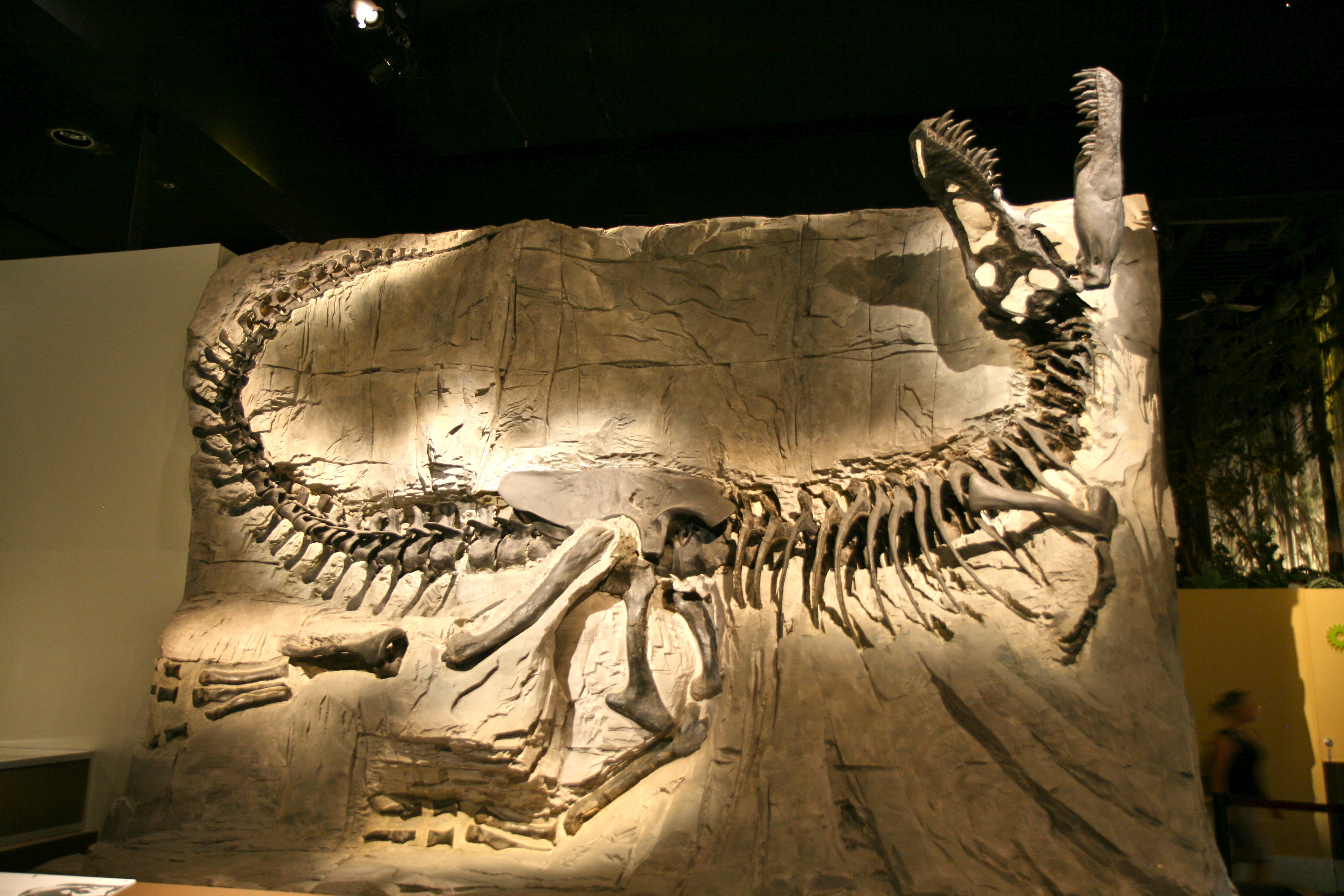
This image is Black Beauty, a rare mineral-blackened Tyrannosaurus rex fossil found in the Crowsnest pass, Alberta. I want to go back.
shared fate
Finally getting to a book I was supposed to have read in 1990 (assigned in a graduate course), I just completed Akio Morita's Made is Japan.
Morita, a cofounder of SONY, offers his memories perspectives on Japan's post war economic miracle, and the birth of his company as a global electronics pioneer. The book was published in 1986 and introduces some of the confrontations that characterized Japan / USA relations in the late 80s and 90s. I'm actually happy to have only read this now, as it resonates more with where i am now, than the callow grad student of 1990. In particular, the following quote stays with me:
The most important mission for a Japanese manager is to develop a healthy relationship with his employees, to create a family-like feeling within the corporation, a feeling that employees and managers share the same fate. Those companies that are most successful in Japan are those that have managed to create a shared sense of fate among all employees, what Americans call labor and management, and the shareholders.
A sense of shared fate and trust is critical in building a knowledge based firm that relies on attracting and retaining the best. Wisdom from an industry giant.
science and the salmon debate
Tony Farrell schools us on the perils of simplification and media in public debates over scientific questions. The mysteries of the Fraser River Sockeye, and more broadly the health of pacific salmon, are as heated as they are cryptic, and you need to spend just a little time with scientists in the field to learn that we don't know what the hell is going on with salmon, particularly in the open ocean. Dr. Farrell:
Scientists routinely agree to disagree, but that doesn't sit well with society-at-large, which increasingly demands instant answers and quick solutions.
Nowhere is this more painfully apparent than in the debate and confusion around the future of salmon in British Columbia, which is the current topic of an expensive federal inquiry, the Cohen Commission.
The problem is that we expect too much, too soon from science. The announcement of an "overnight" discovery is always backed by an awful lot of scientific discovery and testing.
While responsible scientists couch their discoveries with words like could, may and might, prudent caution too often gets lost in translation.
still got nothing
Image
not much and too much going on
heh
Environmental Policy news: Germany’s plan to shut down its nuclear plants will add 40 million tons of CO2 per year
Environmentalists welcomed the shift, although some demanded a faster phase-out, hoping it would spur a shift to renewable energy which they view as less harmful by avoiding radioactive waste.
But analysts say the move will also see an increase in planet-warming greenhouse gases equivalent to the annual emissions of Slovakia, as Germany uses gas and coal to plug a power generation gap, both of which are more carbon-emitting than nuclear power.
via www.enn.com
Deering Island
Biking a week ago, we followed the edge of the Fraser and discovered an interesting sliver of the city. A little high-end enclave (to the right in photo) of manicured gardens and backyard jetties.
the end is nigh
Energy-related carbon-dioxide (CO2) emissions in 2010 were the highest in history, according to the latest estimates by the International Energy Agency (IEA).
After a dip in 2009 caused by the global financial crisis, emissions are estimated to have climbed to a record 30.6 Gigatonnes (Gt), a 5% jump from the previous record year in 2008, when levels reached 29.3 Gt.
In addition, the IEA has estimated that 80% of projected emissions from the power sector in 2020 are already locked in, as they will come from power plants that are currently in place or under construction today.
“This significant increase in CO2 emissions and the locking in of future emissions due to infrastructure investments represent a serious setback to our hopes of limiting the global rise in temperature to no more than 2ºC,” said Dr Fatih Birol, Chief Economist at the IEA who oversees the annual World Energy Outlook, the Agency’s flagship publication.
via www.iea.org
People being who we are, I suspect it will take extended, soaring food prices linked to crop failure to get to substantive policy and behavioural change.
you would think so
via Sullivan:
"I'm not a meteorologist. All I know is 90 percent of the scientists say climate change is occurring. If 90 percent of the oncological community said something was causing cancer we'd listen to them," - Jon Huntsman, in Time.